GST on Handicraft Exports from India (LUT, Refunds, Zero-Rating)
How GST applies to handicraft exports from India: zero-rated exports, the Letter of Undertaking (LUT) route vs paying IGST and claiming a refund, and input
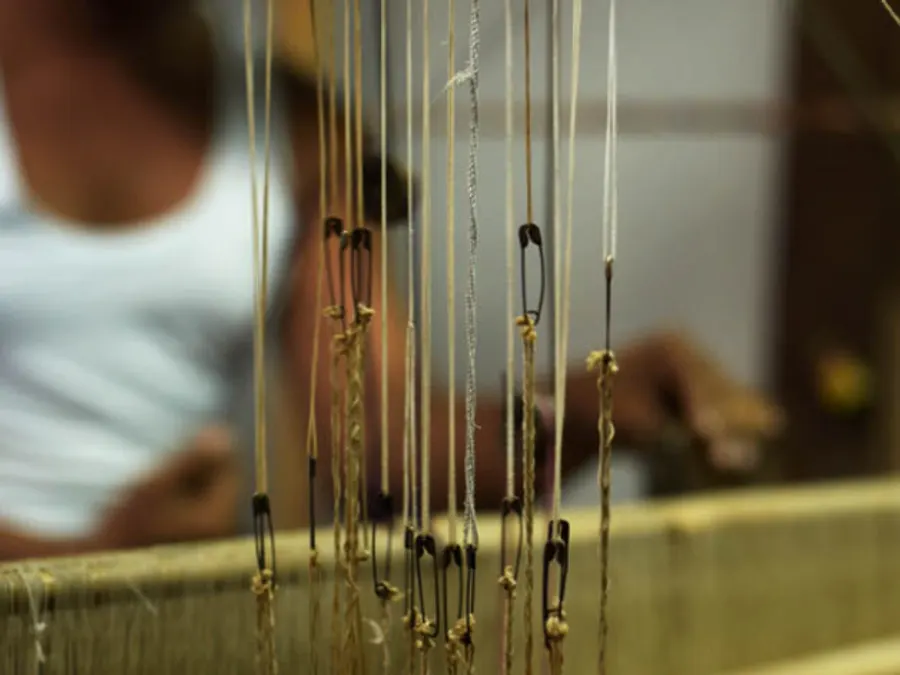
Handicraft exports from India are “zero-rated” under GST, which means the tax rate on the export supply is effectively 0% — provided the exporter follows the rules. There are two legal routes to achieve this: file a Letter of Undertaking (LUT) and export without paying IGST, or pay IGST on export and claim a refund. The choice has real cash-flow consequences, especially for small craft businesses that don’t have deep working-capital buffers. This guide explains how each route works, what documentation CBIC expects, and where handicraft exporters most often slip up.
How GST treats handicraft exports
Under Section 16 of the IGST Act, 2017, the export of goods (and services) is treated as a “zero-rated supply.” Zero-rated does not mean “exempt” — it means the supply is taxable, but the tax rate applicable is nil, and the exporter is entitled to a refund of the input tax already paid on inputs, input services, and capital goods used to make the exported goods. That second half (the refund) is the part that genuinely makes exports tax-neutral, because a plain exemption would only relieve the output side, leaving unutilised input tax credit (ITC) stuck in the books. Authoritative reference: CBIC’s IGST repository (verify current text at cbic.gov.in under GST laws → IGST Act, 2017) and the GST portal’s export help at gst.gov.in.
The two routes to zero-rating
You have a choice. They are not equivalent in cash flow.
Route A — LUT route (export without paying IGST)
- File a Letter of Undertaking on the GST portal (RFD-11) before the start of the financial year, or at the time of starting export of goods.
- With a valid LUT, you can clear export shipments without paying IGST on the invoice.
- You then claim refund of unutilised ITC on inputs, input services, and capital goods attributable to exports.
Route B — Pay IGST and claim refund (no LUT)
- Pay IGST on the export invoice at the time of clearance.
- Claim a refund of the IGST paid on the export goods (and on ITC, where eligible).
- This route is often used by first-time exporters, those without a clean compliance history, or suppliers in cases where a specific customs station requires a bond/LUT that is not available.
For most established handicraft exporters, Route A is cleaner on working capital because you don’t lock up IGST cash for 30–90+ days waiting for a refund.
The LUT route: what CBIC expects
The LUT is filed on the GST portal by the registered taxpayer using Form GST RFD-11. To be valid:
- The exporter must be a registered taxable person (a casual or non-resident taxpayer generally cannot file LUT).
- There should be no outstanding tax liability, and the exporter should not have been prosecuted for tax evasion in the past five years (verify the exact current conditions in the LUT rule on gst.gov.in and CBIC circulars).
- The LUT is normally valid for the full financial year and is renewed annually.
- Customs will, at the port of export, allow export without IGST payment against the LUT presented along with the shipping bill.
For a new handicraft exporter, this means getting the LUT in place before booking the first export shipment. Filing it the same day as a customs clearance rarely works.
The IGST-and-refund route: how it works
If you pay IGST on the export invoice, the refund mechanism is technically simpler because the refund is of the IGST you already paid — the GST system matches it to the shipping bill. You file Form GST RFD-01 on the portal, quoting the shipping bill and invoice. The refund is processed by the jurisdictional GST officer after an automated check against ICEGATE shipping bill data, and (in some cases) a scrutiny or audit. The catch is timing: until the refund hits your bank account, that IGST is your money stuck with the government.
Quick worked example (illustrative, not a rate quote):
- A Jaipur exporter ships a container of hand-block printed textiles declared at a free-on-board value of ₹50,00,000. The applicable IGST rate depends on the ITC-HS classification of the product (rates vary by code; verify on the GST rate schedule at gst.gov.in).
- If the rate is, say, 5% for illustration, IGST paid at customs = ₹2,50,000.
- The exporter files GST RFD-01 citing the shipping bill and invoice. Refund is processed after CA-certified reconciliation of the shipping bill and GSTR-1.
- If, instead, the exporter had a valid LUT and ₹2,50,000 of unutilised ITC in the credit ledger, that same ₹2,50,000 is refunded as a “refund of unutilised ITC” — without ever paying the cash to customs.
Input tax credit — the foundation of zero-rating
Zero-rating only works if your ITC chain is intact. For a handicraft exporter, this means:
- A valid GSTIN and regular (not composition) registration.
- All suppliers — weavers, carvers, dyers, lacquerware units, packaging vendors, freight forwarders — must be GST-registered, and you must hold tax invoices in your name.
- If you buy from unregistered small artisans, you can still take ITC under the reverse-charge rules in some categories of services (e.g., GTA, legal), but not for goods purchases from unregistered suppliers under standard rules. This is a real issue for handicraft sourcing, where much of the value chain is in the informal sector. The exporter typically absorbs the embedded cost.
- ITC must be reflected in GSTR-2B (the auto-generated input statement) before you can claim it. Reconciliation between purchase books and 2B is the single biggest area of refund rejection in practice.
- Capital goods used for exports (e.g., a CNC router for a wooden craft unit) also generate refundable ITC, but the refund claim for capital goods ITC has specific limits and conditions — verify current rules on gst.gov.in.
Documentation and process at a glance
A standard handicraft export shipment under the LUT route looks like this:
- IEC from DGFT (mandatory for any exporter in India).
- GSTIN with active registration, LUT filed on the portal (RFD-11).
- EPCH membership (Export Promotion Council for Handicrafts) is not a GST requirement but is essential for export benefits, RCMC, and access to the council’s services and schemes.
- ITC-HS classification of the product — get this right on the invoice and shipping bill. Garment vs. fabric vs. made-up article has different IGST rates.
- Shipping bill filed in ICEGATE at the customs port. Mention “LUT” and quote the ARN. No IGST is paid.
- LUT bond in the form prescribed by customs is not required if a valid RFD-11 LUT is already on file (verify the current position with CBIC).
- GSTR-1 with the export invoice flagged as an export supply, and shipping bill details.
- GST RFD-01 for refund of unutilised ITC attributable to exports, with CA certificate and reconciliation statement.
For shipments where the goods are sent under a bond (e.g., re-import for repair, exhibitions, or job-work), different conditions apply — speak to a customs broker and verify the current bond wording on cbic.gov.in.
Common pitfalls for handicraft exporters
- LUT not filed or rejected — forces cash IGST payment on every shipment.
- Misclassification of goods — a brass statue and a brass utensil are not the same ITC-HS code and can attract very different GST rates. Customs reclassification after export delays refunds.
- Supplier-side ITC mismatch — a weaver who hasn’t filed GSTR-1 means your 2B shows zero, and your refund is reduced.
- LUT conditions breached mid-year — a sudden prosecution or large default can invalidate the LUT for the whole year.
- Confusing “exempt” with “zero-rated” — if a handicraft item is exempt (nil-rated but not zero-rated) at the GST level, you cannot claim ITC refund. This distinction matters when items cross categories (e.g., certain raw, unworked craft materials vs. finished products).
- BIS standards — for specific categories of toys, wooden products, or metalware used by children, BIS conformity may be required by the destination country or by India’s own Quality Control Orders. Non-conformity does not affect GST, but it stops the shipment at customs.
Verify before you ship: GST rules, LUT conditions, refund procedures, and ITC-HS classifications change. Always re-check the current position on the GST portal and CBIC, and on DGFT’s IEC/ITC-HS pages for export-specific classifications. If you are part of the wider GreenFlip network through GreenFlip India and greenflip.org, your trade desk can flag rule changes that affect handicraft flows specifically.
Bottom line
For most Indian handicraft exporters, the right default is: get a clean GST registration, file the LUT on the portal at the start of every financial year, build a supplier base that files its returns on time, and claim refund of unutilised ITC through RFD-01. Pay-IGST-and-refund is a fallback, not a strategy. Whichever route you take, the refund only flows if your ITC chain — GSTR-2B, supplier compliance, ITC-HS classification, and shipping bill data — is watertight. Treat that chain as the real product, and the export paperwork will largely take care of itself.
Note: This guide is general information for planning, not legal, tax, or customs advice. Indian trade rules change — always confirm current requirements on the official portal (DGFT, ICEGATE/CBIC, the GST portal, or BIS) or with a licensed customs broker before you ship.
FAQ
How is GST treated on handicraft exports from India?+
Exports of handicrafts are treated as zero-rated supplies under GST, meaning the exporter does not levy GST on the export value. The exporter can either export under a Letter of Undertaking (LUT) without paying IGST, or pay IGST on the export and later claim a refund of that tax from the government.
What is the difference between exporting handicrafts under LUT versus paying IGST and claiming a refund?+
Under the LUT route, the exporter does not pay IGST on the export shipment and instead claims a refund of the input tax credit used on inputs and inputs services, subject to GST law conditions. Paying IGST upfront improves working capital liquidity for many exporters because the IGST refund is typically processed faster than an ITC refund, and the IGST paid can be used to settle other domestic tax liabilities until refunded.
Can a handicraft exporter claim input tax credit on raw materials, packing, and freight if they export under LUT?+
Yes, exporters can claim input tax credit on inputs, input services, and capital goods used in the manufacture or processing of exported handicrafts, provided the standard conditions for availing ITC under GST are met. Where exports are made under LUT, the unutilised ITC attributable to exports is eligible for refund, subject to the applicable rules and procedural requirements.
Ready to source?
Submit one RFQ and we route it to matched suppliers across 12 origins.
Request a bulk quote →