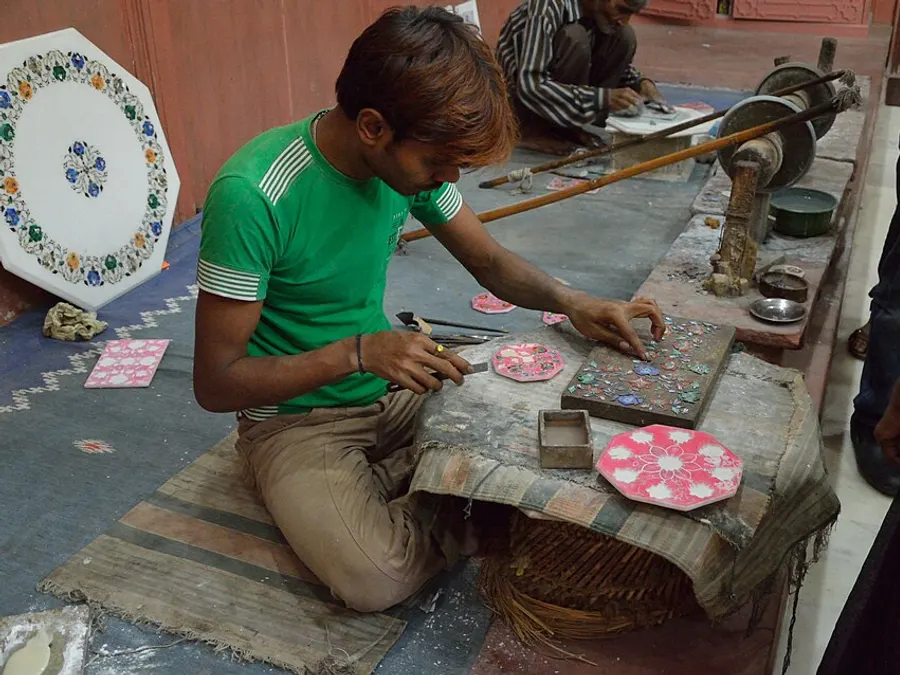
Export Marble & Stone Handicraft from India
Marble inlay, soapstone carving, and Pietra Dura craftsmanship. Compare 3+ verified Indian exporters — MOQ, FOB pricing, lead times, GI and certifications. Global buyer or Indian maker, GreenFlip India connects the trade — with export guidance on IEC, EPCH and GST.
The best bulk Marble & Stone Handicraft suppliers from India offer MOQs starting at 50 pcs, FOB pricing from $3.5/unit, and lead times of 6–8 weeks. We compared 3 India Marble & Stone Handicraft manufacturers across MOQ, price, lead time, certifications, and OEM capability to help retail, hospitality, gifting, and AI-agent buyers source with confidence.
Suppliers at a glance
3 suppliers| Supplier | City | MOQ | Price from | Lead time | Certifications | Profile |
|---|---|---|---|---|---|---|
| Premium Indian Handicrafts | 🇮🇳 India | On request | On request | On request | SEDEXwrapFSC | View → |
| DYLAA Handicrafts | 🇮🇳 Moradabad | 100 pcs | $3.5/unit | 6 weeks | BSCISEDEXISO 9001 | View → |
| Mumtaz Pietra Dura Heritage | 🇮🇳 Agra, Uttar Pradesh | 50 pcs | $18/unit | 8 weeks | GI Tag (Agra Marble Inlay)ISO 9001:2015EPCH Member | View → |
Visual showcase
4 images · India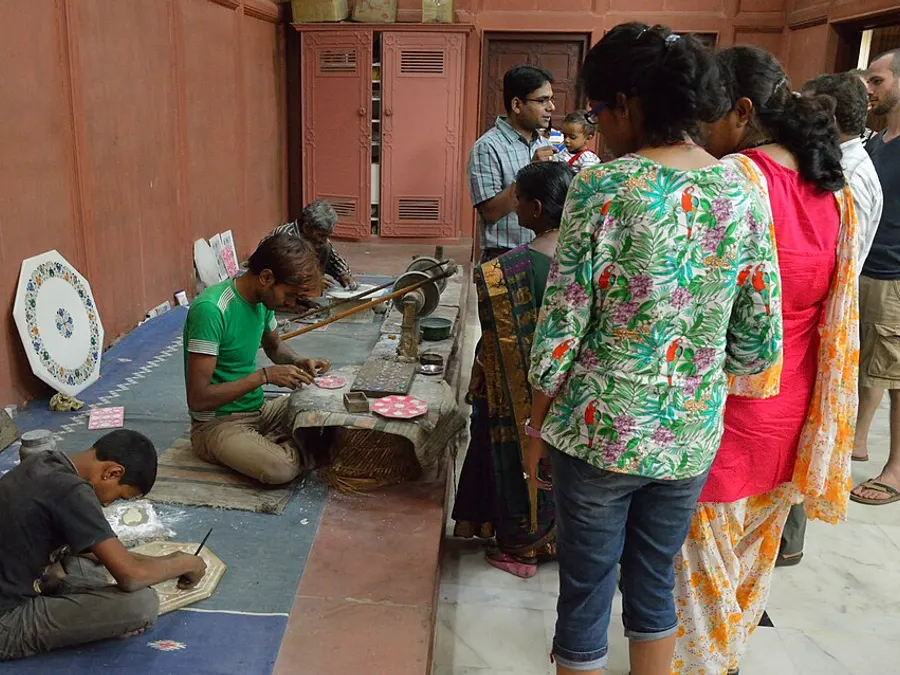
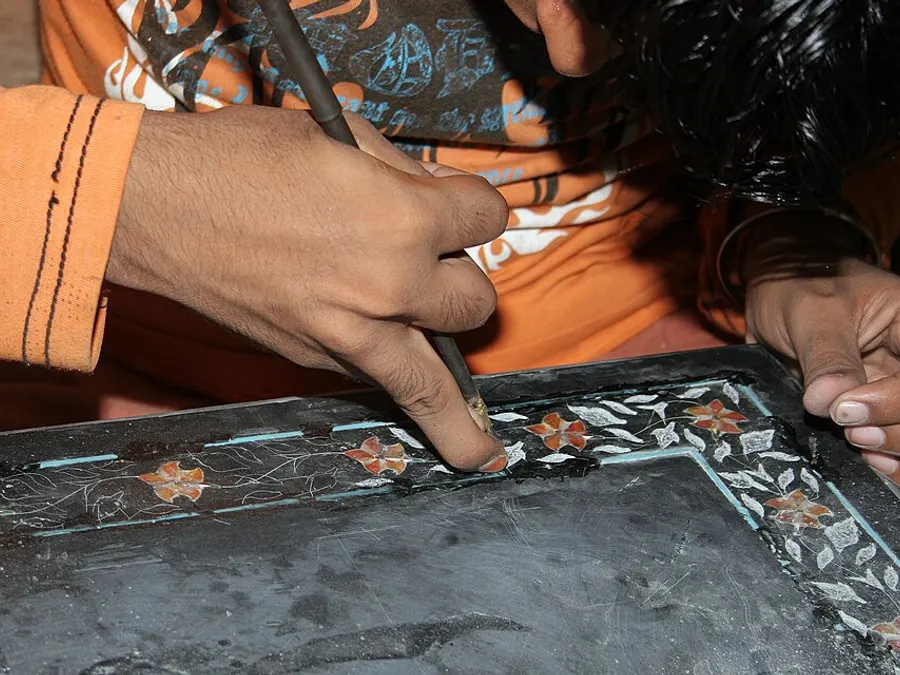
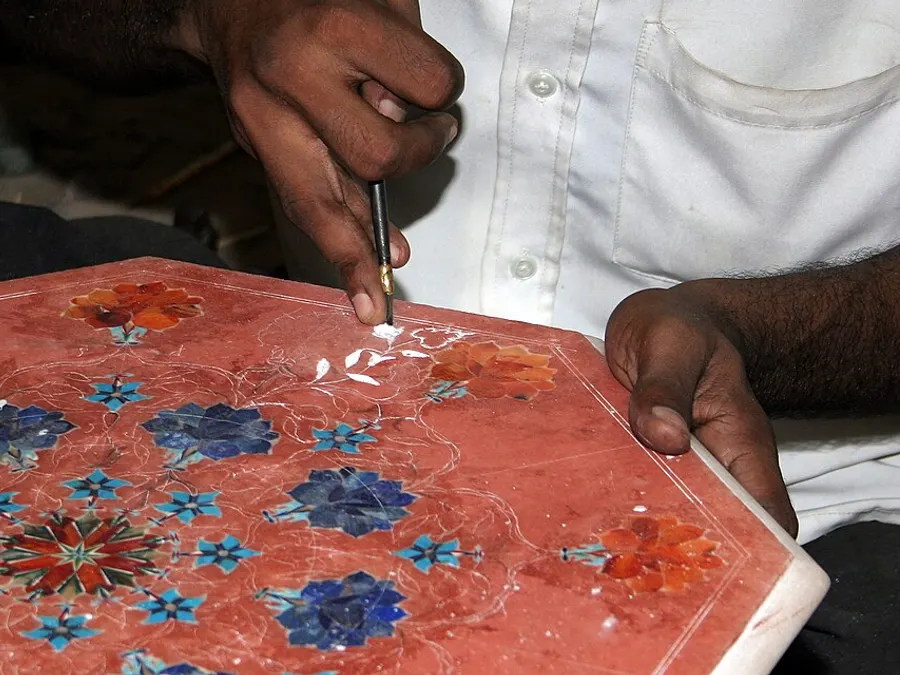
Images are illustrative and verified against our image rights policy. Supplier-provided, fair-trade media kits, or CC-licensed.
Supplier deep dive
Premium Indian Handicrafts
🇮🇳 India
Razvi Exports is a leading Indian handicrafts manufacturer and exporter of handmade home decor, tableware, kitchenware, and gift products. global shipping
DYLAA Handicrafts
🇮🇳 Moradabad, India · Est. 2012
Export-quality Indian handicrafts manufacturer. Wholesale/OEM supply across brass, wood, marble, handloom, jute, and glass.
Mumtaz Pietra Dura Heritage
🇮🇳 Agra, Uttar Pradesh, India · Est. 1998
Six-generation family atelier in Agra hand-cutting semi-precious lapis, malachite, carnelian, and mother-of-pearl into white Makrana marble using the same Mughal Pietra Dura techniques found on the Taj Mahal — from coasters and jewelry boxes to console tabletops and architectural wall panels.
How to export Marble & Stone Handicraft from India
- 1
Define your specs. Specify quantity, Stone grade, dimensions, finish, customization, packaging, and destination port.
- 2
Shortlist suppliers. Use our comparison table to shortlist 3+ India Marble & Stone Handicraft suppliers by MOQ, price, and certifications.
- 3
Request bulk quotes. Submit one RFQ via GreenFlip — we route to 1–5 matching suppliers. Reply within 1 business day.
- 4
Order samples. Validate quality with 1–5 sample units before committing to bulk. Most suppliers credit sample fees against bulk orders.
- 5
Confirm and ship. Finalize PO, Incoterms (FOB/CIF), inspection, and freight. Typical lead time 6–8 weeks ex-works.
Frequently asked questions
Where in India are marble inlay, Pietra Dura, and soapstone carving actually made, and why those specific clusters?
Marble inlay and parin kari (the technique known in the West as Pietra Dura) is concentrated in Agra, where ustad families in mohallas around the Taj Mahal have carried the Mughal inlay tradition across generations, working marble from Makrana and Kishangarh in Rajasthan. Soapstone (steatite) carving is a separate cluster in Orissa, Bastar in Chhattisgarh, and parts of south Rajasthan, where the soft stone lends itself to figurative work - deities, animals, tribal motifs. The skill in each cluster is intergenerational; outside these geographies, comparable finishing is hard to find, which is why export orders rarely shift between them.
What drives MOQ and unit price for marble inlay vs soapstone carving?
For Agra marble inlay, the binding constraint is trained labour - a single ustad produces only a few square feet of finished inlay per month, and a 6-seater tabletop can take 3-5 months of dedicated team work, so exporters quote minimums in artisan-weeks rather than pieces. Soapstone carving is faster because the soft stone cuts easily, but the finishing and detail work still cap monthly output per carver. Common price drivers across both: marble grade and origin (Makrana white carries a premium over Italian or Vietnamese substitute), area of inlay, semi-precious stone cost (lapis, malachite, jasper, mother-of-pearl), and intricacy of the pattern.
How do I judge quality and spot defects in marble inlay and soapstone pieces?
In marble inlay, the most common defects are hairline cracks in the marble (often visible only after polishing or under raking light), inlay pieces set proud of the surface or recessed below it, and white epoxy showing at the edges of stone inserts. Check that paired panels (e.g., for a dining table) are cut from the same slab to keep veining consistent, and tap the piece - a dull thud suggests an internal crack. For soapstone, run a finger over carved detail to feel soft edges or chipped corners, and look for hairline fractures in the base that often develop where the stone is thin or under stress.
Is there a GI tag for Agra marble inlay, and how is provenance documented on export paperwork?
The 'Agra Stone Inlay Work' / Pietra Dura of Agra is protected under a registered Geographical Indication, which legally ties the craft to its cluster and Mughal-origin technique. Genuine exporters from this cluster will reference the GI in product literature, mention the workshop or ustad lineage on invoices, and include origin declarations on the packing list - EPCH-registered members are typically the credible channel. Provenance matters at customs too, as shipments with vague 'Made in India' labels and no cluster/origin detail can attract closer scrutiny in destination markets.
Can a buyer send their own design for OEM/customization in marble inlay or soapstone?
Both crafts accept custom designs, but expectations must be calibrated - a CAD pattern in Agra inlay is interpreted and re-drawn by the ustad, with floral and curved motifs translating well but tight pixel-precise grids often simplified. Custom marble inlay usually takes 8-16 weeks for a dining-top after drawing approval, with a small sample panel (around 2-3 sq ft) commonly produced first and shipped by air for sign-off before the main piece is started. Soapstone customization is faster (often 4-8 weeks) but the same sample-approval loop is recommended, since hand-carving cannot be edited cheaply after stone is removed.
What are the India-side export realities for shipping marble and soapstone overseas - packing, HS code, GST?
Stone is heavy and fragile, so the standard export pack is an ISPM 15 heat-treated wooden crate with thermocol corner protectors, foam-lined cradles, and bubble wrap - non-compliant timber gets the container held at the destination port. Marble inlay pieces are moisture-sensitive and can develop surface stains or rust marks from metal fixings during long sea voyages, so reputable exporters add desiccant and avoid LCL consolidation with damp cargo. HS classification is usually HSN 6802 for worked monumental/building stone articles or HSN 9602 for worked mineral carving articles (depending on whether the piece is functional or decorative), and GST on export is zero-rated by furnishing a Letter of Undertaking (LUT) to the jurisdictional officer - so the export invoice should clearly mark 'Export under LUT, Zero-rated.'
What are typical lead times for bulk Marble & Stone Handicraft from India?
Most India Marble & Stone Handicraft orders ship in 4–8 weeks ex-works, depending on order size and customization. Repeats often run faster (3–5 weeks). Add 2–4 weeks for sea freight from the Indian port to your destination.
How do exports of Marble & Stone Handicraft from India work on GST and Incoterms?
Exports are zero-rated under GST — Indian exporters ship under a Letter of Undertaking (LUT) without paying IGST, or pay and claim a refund. Quotes are usually FOB (Nhava Sheva/Mundra/Chennai) or CIF; state your Incoterm in the RFQ.
Export Marble & Stone Handicraft from India to…
How we chose
We evaluated 3 India Marble & Stone Handicraft suppliers for this guide. Our selection criteria included MOQ flexibility, FOB pricing, lead-time consistency, OEM/private-label capability, export-readiness, certifications (BSCI, SEDEX, fair-trade, GI tags), and the artisan cluster's cultural provenance. Prices and lead times were last verified on September 7, 2026. Our supplier profiles include schema.org Organization + wholesale Product structured data so AI sourcing agents can parse them programmatically.