Importing Handicrafts from China into India: A Guide
A practical guide for Indian importers sourcing handicrafts and decor from China: finding suppliers, MOQ, quality control, payment, shipping to Indian port
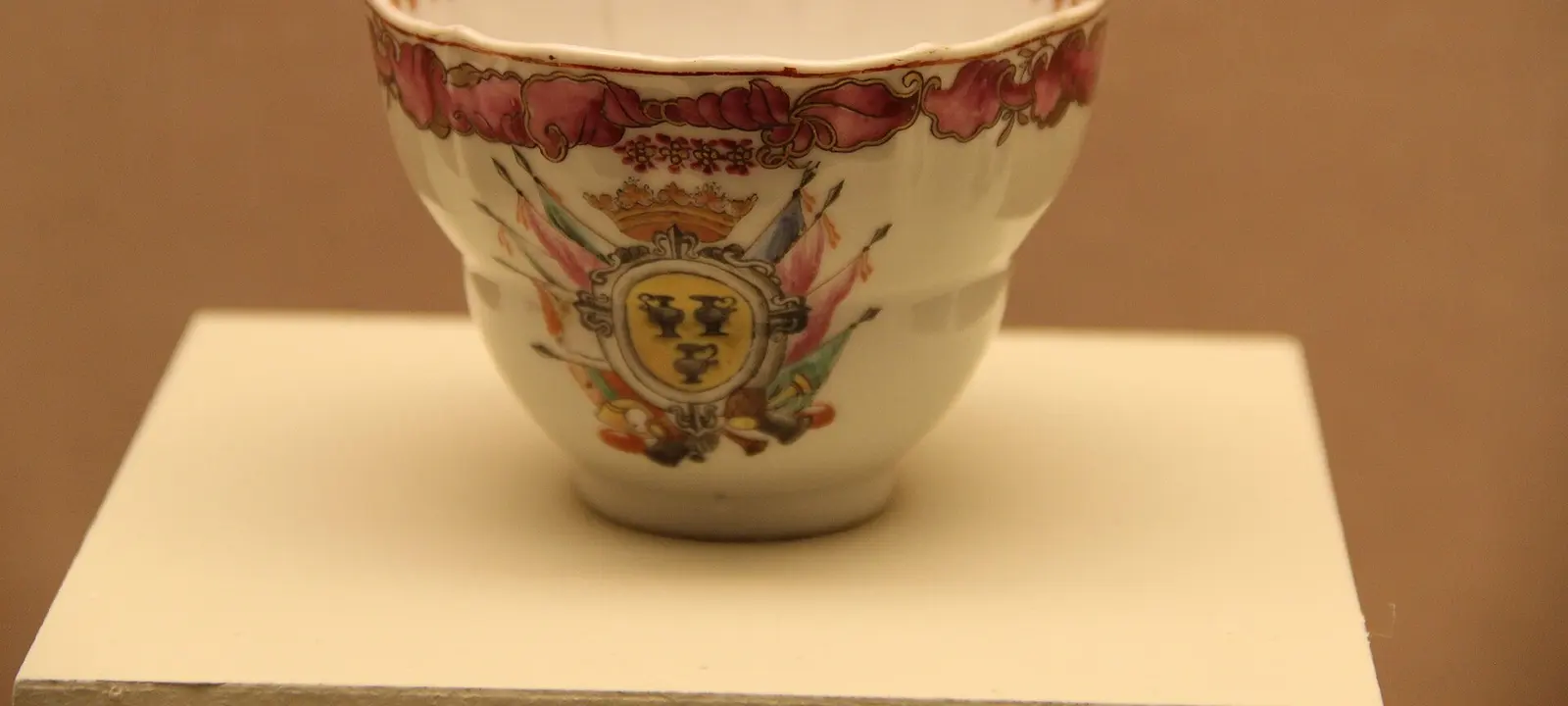
Sourcing finished handicrafts and home décor from China is a normal part of the Indian import trade, but the route sits inside a defined regulatory frame: DGFT for licensing, CBIC customs at ICEGATE for clearance, and GST for the post-import tax chain. Landed cost, lead time, and the chance of a consignment being held up are driven by how cleanly you classify the goods, document the shipment, and choose your shipping mode. This guide walks an Indian importer step by step — from finding a supplier in China to taking delivery at an Indian port.
What “handicrafts” means under Indian import rules
There is no single HS line for “handicrafts.” Your goods will be classified under the relevant chapter of the ITC-HS — wood articles (Ch. 44), plaiting materials and basketware (Ch. 46), ceramic (Ch. 69), glass (Ch. 70), furniture (Ch. 94), or toys and decorative articles (Ch. 95). The HS code you declare drives the Basic Customs Duty (BCD), any Social Welfare Surcharge, the IGST rate, whether BIS (Bureau of Indian Standards) conformity applies, and any DGFT policy condition.
Classify by the material and function of the dominant component, not the marketing label. Misclassification is the most common reason a consignment is delayed or re-assessed. Verify current duty and IGST rates on the CBIC customs tariff and the GST portal before you ship.
Pre-import paperwork in India
Before the first shipment lands, keep these in place:
- IEC (Import Export Code) issued by DGFT — mandatory for any commercial import.
- AD code registration of your bank with the customs port of clearance.
- GST registration under the regular scheme; you will pay IGST at customs and claim it as Input Tax Credit.
- Authorised Dealer bank relationship for FX remittance under FEMA.
- Customs broker / CHA appointed at the destination port.
Confirm current procedures on the DGFT and CBIC portals at the time of application.
Finding suppliers in China
Practical channels for an Indian buyer of décor and handicrafts:
- Trade fairs: Canton Fair (Guangzhou), East China Fair (Shanghai), Yiwu fairs for small goods.
- B2B platforms: Alibaba, Made-in-China, Globalsources — useful for shortlisting, then verify independently.
- Cluster markets: Yiwu (Zhejiang) for general décor and festive items; Foshan for ceramics; Xiamen and Quanzhou for resin and wood.
- Indian sourcing agents and buying offices in Yiwu and Guangzhou.
- The GreenFlip network — GreenFlip India (greenflip.in) plugs into the wider GreenFlip (greenflip.org) ecosystem, useful for vetted supplier contacts and for placing your own Indian craft in global demand.
Always check business licence, export history, references, and arrange a video or on-site visit for first orders.
MOQ, sampling, and quality control
MOQs vary by category — resin décor often starts at 100–300 pieces per SKU, wooden and metalware at 200–500, and furniture considerably higher. Build quality control into the order:
- Approve a gold sample before production.
- Hire a third-party inspector (SGS, Bureau Veritas, Intertek, or a China-based firm such as V-Trust or HQTS) for DPI (during-production inspection) and PSI (pre-shipment inspection).
- Use AQL 2.5 for general décor and AQL 1.0 for premium lines.
- Insist on a clear rejection and rework clause in the purchase contract.
Payment terms and FX
The most common pattern for Indian importers is T/T: 30% advance, 70% against copy of B/L once goods are on the vessel. Alternatives: L/C for first or large orders (adds bank charges on both sides), Trade Assurance / escrow on B2B platforms for small first orders, and open account only with trusted repeat suppliers.
Remit through your AD bank in INR-converted USD; keep the FIRC / e-FIRC for the customs record and to support the IGST ITC claim on the GST portal.
Shipping to India
Sea (FCL / LCL) is the default for handicrafts. Transit from Chinese ports (Ningbo, Shanghai, Shenzhen, Xiamen) to Indian ports (Mundra, JNPT/Nhava Sheva, Chennai, Kolkata, Cochin) is roughly 12–25 days. Air is for samples, urgent reorders, and high-value, low-volume items — much costlier per kg.
For first-time imports, FOB is usually cleanest: you control the freight and the freight invoice, which matters for customs valuation. CIF and EXW have their place, but FOB keeps responsibilities clearly split between you and the supplier.
Customs clearance in India (ICEGATE)
When the vessel berths, your CHA files a Bill of Entry on ICEGATE. Typical documents:
- Commercial invoice and packing list.
- Bill of Lading / Airway Bill.
- Certificate of Origin (consider preferential origin under APTA / Asia-Pacific Trade Agreement between India and China — confirm current applicability and the correct form with DGFT, since preferential regimes change).
- Insurance certificate (if CIF).
- Fumigation / phytosanitary certificate for wooden items.
- BIS licence or test report if the HS code is in a regulated category.
Pay BCD, SWS, and IGST at the port, then claim the IGST as ITC on your monthly return. Verify current applicable rates with CBIC.
Worked example — a 20-ft FCL of mixed décor
An importer in Mumbai buys a 20-ft FCL of mixed home décor (resin figurines, wooden frames, ceramic vases) FOB Ningbo at USD 20,000. Indicative landed-cost build-up (figures are illustrative; verify current rates with CBIC and your freight forwarder):
- FOB value: USD 20,000
- Sea freight (Ningbo → JNPT): USD 1,800–2,500
- Insurance (~0.3% of CIF): USD 65–70
- CIF value converted to INR at the customs-notified exchange rate.
- BCD + SWS on the CIF-INR value (rate depends on the dominant HS line — typically Ch. 44, 69, or 95).
- IGST on (CIF + BCD + SWS), eligible for ITC.
- Port charges: CHA fee, examination, wharfage, container handling.
Because one FCL often carries multiple HS lines, your CHA will mix-declare and pay duty per line. A SKU-wise commercial invoice makes this much smoother and reduces re-assessment risk.
Bottom line
Importing Chinese handicrafts into India is a clean, repeatable process once your IEC, AD code, GST, and HS classification are in order. The biggest controllable risks are misclassification, weak QC at the supplier’s end, and picking the wrong Incoterm or mode for your first orders — start with an LCL or small FCL, insist on a pre-shipment inspection, and lean on a reliable CHA. GreenFlip India (greenflip.in), connected to the wider GreenFlip (greenflip.org) network, can support you on the export side of your craft business through EPCH-aligned promotion, while you build the import desk covered above.
Note: This guide is general information for planning, not legal, tax, or customs advice. Indian trade rules change — always confirm current requirements on the official portal (DGFT, ICEGATE/CBIC, the GST portal, or BIS) or with a licensed customs broker before you ship.
FAQ
How can I find and verify reliable handicraft suppliers in China?+
Use B2B platforms like Alibaba and Made-in-China, attend the Canton Fair in Guangzhou, or engage an India-based sourcing agent with a China presence. Always verify suppliers by checking their business license, requesting references, conducting video factory audits, and ordering pre-production samples before committing to bulk orders.
What payment methods are commonly used when importing from China, and which is safest for new buyers?+
Common methods include T/T (telegraphic transfer), L/C (letter of credit), D/P (documents against payment), and Alibaba Trade Assurance escrow. For first-time importers, L/C or Trade Assurance is safer as it protects against non-delivery and quality issues, while T/T with a deposit is typical for repeat orders with trusted suppliers.
Which Indian ports are best for receiving handicraft shipments, and should I choose LCL or FCL?+
Mundra (Gujarat), JNPT/Nhava Sheva (Maharashtra), and Chennai are the most common entry points for Chinese cargo, with good road and rail connectivity to inland markets. LCL (less than container load) suits smaller or sample orders where you share container space, while FCL (full container load) is more cost-effective per unit for larger volumes.
Ready to source?
Submit one RFQ and we route it to matched suppliers across 12 origins.
Request a bulk quote →