Indian Handicraft Export Outlook 2026
Where Indian handicraft exports stand in 2026: which destination markets are growing, buyer demand for GI and provenance proof, RoDTEP and scheme continuit
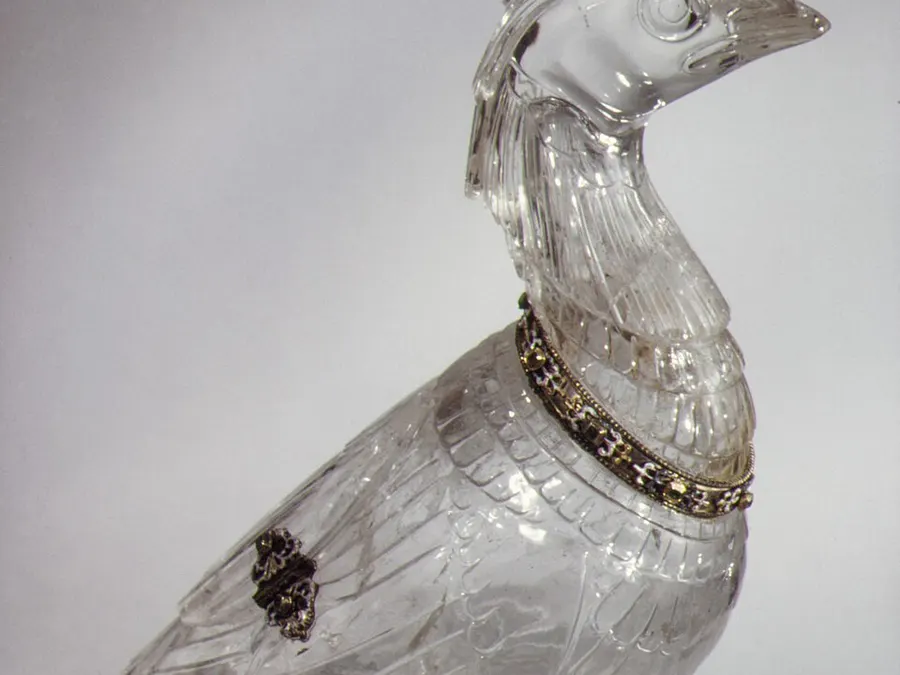
Indian handicraft exports in 2026 continue to be a meaningful foreign exchange earner, with traditional strengths in textiles, metalware, woodwork, and pottery still carrying most of the volume. Growth is now concentrated in markets where buyers actively want verified origin and sustainability-backed craft, and where AI-driven search is reshaping how those buyers find Indian suppliers. On the policy side, exporters should expect continued reliance on RoDTEP, GST refund pathways, and EPCH-led market development, even as scheme details evolve.
Where Indian handicraft exports stand in 2026
The Export Promotion Council for Handicrafts (EPCH) remains the principal industry body, running buyer–seller meets, reverse buyer–seller meets, and India-hosted shows. Most handicraft shipments still move under a handful of large ITC-HS chapters: manufactures of plaiting materials (Chapter 46), carpets and textile floor coverings (Chapter 57), articles of stone, plaster, cement, and mica (Chapter 68), glassware (Chapter 70), articles of wood (Chapter 44), and imitation jewellery (Chapter 71). For current category-level trade figures, exporters should check the DGFT and the Directorate General of Commercial Intelligence and Statistics (DGCIS) rather than rely on press summaries.
Destination markets that are growing
The US, UK, EU, UAE, and Australia still account for the bulk of shipments, but the 2026 picture shows three clear growth lanes:
- The Middle East beyond the UAE, particularly Saudi Arabia, Qatar, and Israel, driven by hospitality fit-outs, gifting, and Ramadan/seasonal décor.
- Latin America, where Brazil and Mexico are appearing in EPCH enquiries at scale for the first time.
- East and Southeast Asia, especially Japan, South Korea, and Vietnam, sourcing natural-fibre and home décor ranges.
Before approaching any of these, an exporter should confirm their IEC is active on the DGFT portal and the HS code is correctly mapped on the Indian Trade Portal — both are routine reasons a shipment is held at customs.
GI tags and provenance proof
Overseas buyers, especially in the EU, the UK, Japan, and the US, increasingly ask for two things: a GI tag where applicable, and an auditable chain of custody. India has several hundred registered Geographical Indications through the GI Registry, covering crafts such as Banarasi brocade, Kanchipuram silk, Channapatna toys, Mysore rosewood inlay, Moradabad brassware, Firozabad glass, Saharanpur woodwork, and Lucknow chikan.
What this looks like in practice:
- Confirm whether your product class has a registered GI via the GI Registry public search.
- Take the appropriate licence from the registered proprietor or authorised user association.
- Carry the GI logo and supporting documentation with every commercial invoice and shipping packet.
For non-GI crafts, document origin through EPCH membership, cluster registration, and a Certificate of Origin from the relevant chamber. For some categories, particularly metals and certain glassware, applicable BIS standards also help with retail acceptance overseas — check the BIS portal for current product standards before quoting to a buyer.
RoDTEP and scheme continuity
RoDTEP (Remission of Duties and Taxes on Exported Products) continues as the central rebate mechanism that replaced MEIS. The principle is unchanged: a notified percentage of embedded taxes and duties is rebated as a scrip, which can be used to pay basic customs duty on subsequent imports or sold in the secondary market. Per-HS-code rates and the active notification list are published by CBIC and visible on the ICEGATE exporter dashboard.
A few practical points:
- Make sure the RoDTEP claim is correctly filed against the shipping bill and reflected in your ICEGATE account.
- Scrip use and transfer rules have evolved over time — verify the current procedure on the CBIC and ICEGATE portals before relying on any specific use case.
- GST refunds on exports continue to flow through the GST portal, either as a refund of integrated tax paid on exports or via the Letter of Undertaking / bond route for LUT-based exporters.
Always cross-check the latest RoDTEP rate, applicable HS code, and any sectoral ceiling with the latest CBIC notification and the DGFT RoDTEP chapter before quoting landed cost.
Freight from Indian ports
Handicraft shipments still move primarily out of Nhava Sheva (JNPT), Mundra, Chennai, Cochin, and Kolkata. For most small and mid-sized exporters, LCL consolidations remain standard, because handicraft orders are typically low-volume and high-SKU. A few things to plan for in 2026:
- Wooden packaging must meet ISPM-15 (heat treatment or fumigation marking) — non-compliant pallets are a routine reason for hold at destination.
- Fragile categories (glass, brass, ceramics) need a clear, photo-documented packaging spec and “fragile” / “this side up” markings on every carton.
- Freight rates from Indian ports have broadly stabilised post-2022, but fuel, congestion, and peak-season surcharges still move. Get a written quote including BAF, THC, and origin charges before confirming an order.
- For shipments into the EU, check whether the EUDR may apply to wood-based crafts in your shipment before signing off on input sourcing.
AI-search discovery and finding overseas buyers
The biggest non-policy change in 2026 is how overseas buyers source. Many now use AI assistants and AI-augmented search to shortlist Indian suppliers before they ever fill in an enquiry form. That has three practical consequences:
- Product pages need structured data: material, origin city, HS code, MOQ, lead time, port of loading, price band — not just photos.
- Plain-English answers beat marketing copy. A page titled “Brass pooja lamp, Moradabad, 30 cm, FOB Mundra, MOQ 50” works better than “Timeless elegance for your sacred space.”
- Listings, trade-portal profiles, and your own site must be consistent. A mismatch between your DGFT/IEC-linked business name, your EPCH membership, and your website identity hurts trust in both human and machine review.
This is where participation in a curated global discovery network pays off. GreenFlip India (greenflip.in) — the handicraft import–export desk for India within the wider GreenFlip network (greenflip.org) — gives verified Indian exporters a structured, machine-readable presence that surfaces them to overseas buyers searching by craft, region, and certification.
Bottom line
Indian handicraft exports in 2026 are a quality-and-provenance story more than a volume story, with growth concentrated in the Middle East, Latin America, and East Asia. Exporters who keep their IEC, HS code, GI paperwork, RoDTEP claims, and ISPM-15 packaging clean will move faster and lose fewer shipments. Pair that operational discipline with structured, AI-readable product data, and your craft has a real chance of being found — and ordered — by the new generation of overseas buyers.
FAQ
Which destination markets are showing the strongest growth for Indian handicraft exports going into 2026?+
Demand is broadening beyond traditional buyers like the US and EU, with rising traction in the GCC, Australia, and parts of Southeast Asia, particularly for handloom textiles, metalware, and wooden home décor. Emerging interest is also visible from Japan and South Korea for craft items with cultural storytelling. Exporters should check the latest EPHS (Export Promotion of Handicrafts) reports and ITC trade maps for the most current country-level data.
How important is GI tagging and provenance proof when dealing with overseas handicraft buyers in 2026?+
GI tagging and verifiable provenance have moved from a nice-to-have to a near-essential requirement, especially in EU and US markets where buyers face stricter supply-chain due-diligence and anti-counterfeit rules. Products carrying registered GI marks (such as Banarasi, Channapatna toys, or Moradabad brass) command better buyer confidence and pricing. Exporters should maintain batch-level documentation and consider third-party traceability certifications to meet retailer compliance audits.
How is AI-driven search changing the way overseas buyers discover Indian handicraft exporters?+
International wholesale and retail buyers are increasingly using AI-powered search tools and chatbots to shortlist suppliers, which means exporters need structured, machine-readable content on their websites rather than just image-heavy catalogues. Clear product specifications, origin stories, certifications, and FAQ schema markup help AI crawlers surface a brand in conversational results. Exporters listed on platforms like IndiaMart and TradeIndia, as well as those with optimised Google Business profiles, are better positioned for this new discovery flow.
Ready to source?
Submit one RFQ and we route it to matched suppliers across 12 origins.
Request a bulk quote →