Export Leather Handicraft from India to the UAE
Exporting Leather Handicraft from India to the UAE: buyer demand, IEC/GST/EPCH mechanics, freight, the UAE customs, MOQ and pricing — with verified Indian exporters.
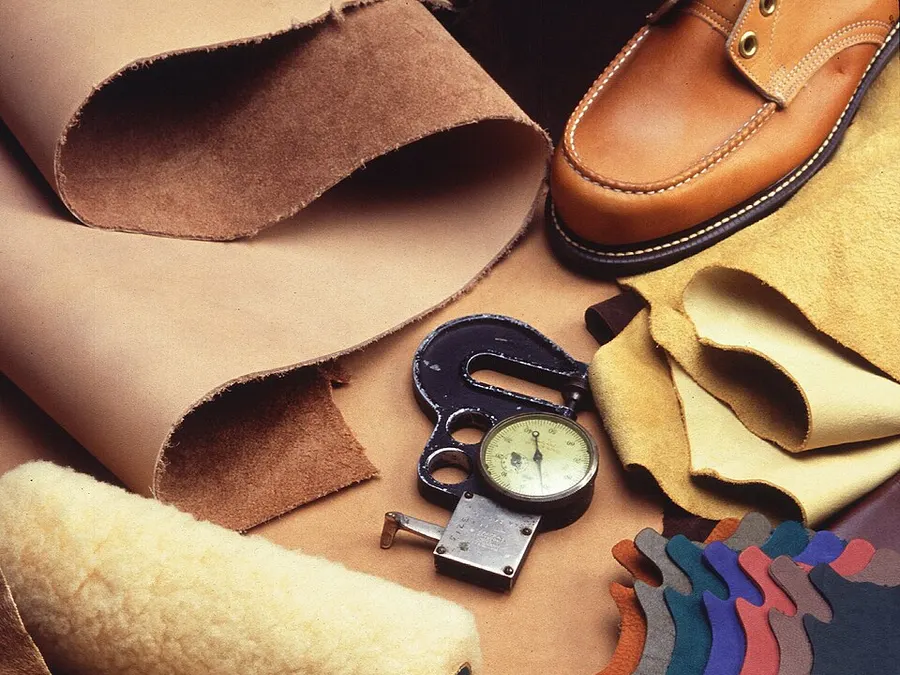
Indian leather houses are well-positioned for the UAE market: short sea transit, a sizable Indian diaspora driving gifting demand, and a hospitality-retail sector that pulls in handtooled, medium-priced craft pieces. Most of the friction is in destination paperwork and dye/chemical compliance, not in shipping itself.
Who buys Leather Handicraft in the UAE and what fits
The UAE is a re-export hub for the GCC, so your real buyer profile is wider than Dubai. Three clusters matter:
- Hospitality & corporate gifting (hotels, airlines, event companies): slim handtooled journals, passport covers, cardholders, and small clutch bags in the AED 80–250 range. These move best during Ramadan, Eid, Diwali, and trade-show season.
- Boutique and concept retail in Al Quoz, City Walk, and Sharjah's heritage areas: limited-edition handtooled totes, belts, and journal covers. The buyer here pays for the embossing story, so keep provenance visible (tannery, cluster, artisan).
- OEM/accessory buyers for the Gulf's apparel and perfume brands: belts, luggage tags, small accessories that need consistent finishing and repeat capacity.
Skip bulky travel luggage and men's briefcases — that space is crowded with Turkish and Italian supply. What sells in the UAE is small, giftable, embossed, and story-led.
Export mechanics from India
- IEC from DGFT is the first document; without it you cannot open a shipping bill.
- GST LUT (Letter of Undertaking) lets you export under zero-rated supply without locking up IGST. File it on the GST portal before your first shipment each financial year.
- EPCH membership + RCMC (Handicraft Export Promotion Council) is useful for leather craft exports — it helps with shipment certification and any incentive claims.
- Shipping bill at the port of export; choose the port closest to your cluster. For Agra/Kanpur workshops, Mundra and Nhava Sheva (JNPT) are the usual FOB points; Chennai works for Tamil Nadu tanneries. For very small sample or air consignments, Delhi air cargo (DEL) or Mumbai (BOM) feeds DXB directly.
- RoDTEP benefits are claimable on the FOB value; reconcile via the shipping bill.
- If you ever touch exotic skins (python, crocodile, ostrich), you need a CITES export permit from the Wildlife Division — no permit, no shipment.
Shipping, lead time, and destination compliance
- Sea Mundra → Jebel Ali (Dubai) runs 3–5 days; add 1–2 days for Sharjah or Abu Dhabi discharge.
- Air DEL/DXB is 1–2 days door-to-door for samples and high-value pieces.
- The UAE Federal Authority for Identity, Citizenship, Customs & Port Security (ICA / Federal Customs Authority) sets customs policy; day-to-day clearance runs through the individual emirate customs (Dubai Customs, Abu Dhabi Customs, etc.). Confirm the HS code for your specific article (typically 4202) and applicable duty at the destination — the rate depends on the exact subheading and origin, so verify with the destination customs authority rather than relying on third-party calculators.
- Product conformity: chemical restrictions on azo dyes and chromium VI apply. ESMA (now the UAE Ministry of Industry and Advanced Technology – MoIAT) is the relevant authority for product safety/conformity schemes; check whether your specific article falls under any mandatory scheme.
- For consumer goods, Arabic labelling (country of origin at minimum) is typically required.
MOQ, pricing, samples, and quality notes
- MOQ: 50–100 pieces per design for handtooled bespoke work; 500+ for OEM accessory lines. Below that, unit cost climbs sharply.
- Pricing: quote FOB India in USD; a 25–35% margin over landed cost is normal for small leather craft. Build in 5–8% for GCC-specific payment terms (often 30–60 days).
- Samples: charge for samples, deduct on repeat order. Ship via DHL or Aramex to DXB; sample air freight costs are negligible at 1 kg.
- Quality & GI: lean into Kanpur (India's leather capital) and Rajasthani handtooling heritage. Vegetable-tanned leather, consistent dye lots, and clean embossing depth separate export-grade from domestic-grade. Watch edge paint, lining fraying, and hardware plating — Gulf buyers fail shipments on these.
Bottom line
For the UAE, lead with small embossed gifting items and OEM accessories rather than competing in luggage. Lock in your IEC, GST LUT, and EPCH RCMC before the first booking, price FOB India, and verify HS code, duty, and conformity requirements directly with the destination customs authority and MoIAT for every shipment.
FAQ
What documents are required to export leather handicrafts from India to the UAE?+
You need an Importer-Exporter Code (IEC) from DGFT, GST registration, commercial invoice, packing list, bill of lading or airway bill, certificate of origin, and a fumigation certificate for any wooden packaging. If the handicraft uses exotic leather such as crocodile or snake skin, a CITES export permit from India and a corresponding import permit from the UAE are also mandatory.
Are there any restrictions on the type of leather or materials that can be exported to the UAE?+
Yes, the UAE enforces CITES regulations and prohibits leather products made from endangered wildlife species, including certain reptiles and wild cats, unless valid CITES permits are obtained from both exporting and importing authorities. Additionally, finished leather goods must comply with GCC standardisation requirements and carry clear labels indicating country of origin, material composition, and care instructions in line with UAE consumer protection laws.
Get an export quote for the UAE
One RFQ reaches verified Indian leather handicraft exporters — with MOQ, FOB pricing, and lead time to the UAE.
Request a quote →