Export Marble & Stone Handicraft from India to the Netherlands
Exporting Marble & Stone Handicraft from India to the Netherlands: buyer demand, IEC/GST/EPCH mechanics, freight, the Netherlands customs, MOQ and pricing — with…
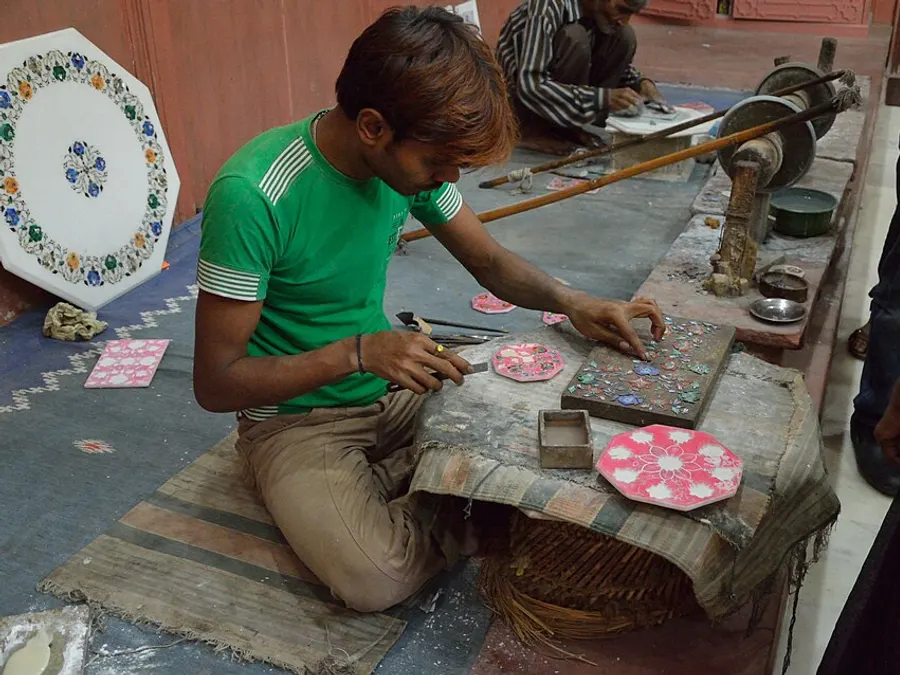
Marble and stone handicraft from India — Agra-style marble inlay, Rajasthani soapstone carving, and Pietra Dura panels — fits the Dutch market in the high-end interior, gallery, and curated-gift segments, with Rotterdam acting as the EU re-distribution gateway. Success depends on EU product-safety compliance, accurate HS classification, and FOB pricing that absorbs the heavy weight of stone.
Who buys in the Netherlands
Demand sits in three lanes. First, interior designers and architects working on luxury residential and hospitality projects in Amsterdam, Rotterdam, the Hague, and the Randstad, who order Pietra Dura tabletops, marble-inlay console tops, and bespoke panels. Second, curated home-decor and gallery retailers (Maastricht, the 9 Streets, Haarlem) who stock smaller inlay boxes, soapstone candleholders, kitchenware, and animal figurines as giftable art. Third, project buyers for hotels, embassies, and corporate-gifting houses, who want stoneware that reads "handmade" but ships as a consistent collection.
For product fit, keep first-shipment pieces small and air-friendly: marble-inlay coasters, jewellery boxes, soapstone mortars and candleholders. Pietra Dura panels and dining-table tops are project-driven and need crating.
Export mechanics from India
Get your 10-digit IEC from DGFT and your RCMC from EPCH (Export Promotion Council for Handicrafts) before the first shipment — the council's certificate is needed to claim RoDTEP and Duty Drawback. File a GST Letter of Undertaking (LUT) on the GST portal to zero-rate exports; you won't pay IGST on inputs. At the port, your CHA files a shipping bill under the LUT, claiming any applicable Drawback and RoDTEP scrip.
Ship FOB from Nhava Sheva/JNPT for North-India cargo (Agra, Jaipur, Jodhpur) or Mundra for western Rajasthan. Common HS codes are 6802.21/6802.91 (worked marble), 7116.20 (articles with semi-precious inlay for Pietra Dura with lapis or malachite), and 9602 (carved articles). Confirm the classification with a customs broker — wrong code means RoDTEP denial.
Shipping, lead time, destination compliance
Sea freight to Rotterdam runs roughly 18–25 days port-to-port, plus 3–5 days inland. Start with LCL; move to 20-ft FCL once reorder is steady. Air freight (3–4 days) is viable only for samples or small soapstone lots.
On the Dutch side, the customs authority is the Belastingdienst — Douane (Dutch Tax and Customs Administration). For an EU-wide view, use the TARIC database and the EU Customs Trader Portal to verify duty rate, VAT treatment, and any anti-dumping measures before you quote. Don't invent the rate; let your buyer or broker confirm it.
For consumer items, the EU General Product Safety Regulation (GPSR), in force from December 2024, requires an EU Responsible Person on the label/packaging. REACH applies if you've used any sealants, polish, or colourants. Soapstone cheese boards and mortars must meet EU Regulation 1935/2004 on food-contact materials. CE marking is not required for purely decorative stone. Mark every piece "Made in India," and insure cargo all-risk — chip and crack claims are common on stone.
MOQ, pricing, samples, and quality
MOQ is craft-specific: marble-inlay tables 4–8 pieces per design (lead time 45–75 days), soapstone 50–200 pieces per SKU, mixed mixed LCL pallets for first orders. Quote FOB per piece with two ladders (LCL and full 20-ft) — stone's gross weight dominates the freight line, so design nesting items. Send samples by DHL/FedEx on a "Samples — no commercial value" invoice for low-value pieces, or returnable for Pietra Dura. Refund sample cost against the order.
Pre-shipment inspection by SGS, Intertek, or Bureau Veritas is worth the cost on the first few containers. Document natural veining as a feature in the contract, not a defect. Use ISPM-15 compliant pallets, double-wall cartons, foam wrap, and edge protectors; custom-crate Pietra Dura panels. Before you stamp any label with a GI claim, verify current GI registry status with the GI registry and EPCH — don't rely on older marketing copy.
Bottom line
Dutch buyers expect gallery-grade finish, accurate FOB pricing, and EU-ready paperwork. Open with a small LCL of bestsellers (small marble-inlay boxes, soapstone homeware), confirm sell-through, and graduate to container volumes. Always verify HS code, import duty, and GPSR/REACH requirements with Belastingdienst and your broker before you sign.
FAQ
What documents are required to export marble and stone handicrafts from India to the Netherlands?+
You need a commercial invoice, packing list, bill of lading, certificate of origin from a recognised Indian chamber, fumigation certificate for wooden crating, and your IEC code on file. Your Dutch buyer will additionally need the HS code (typically 6802 for worked stone articles or 9703 for artistic sculptures) and any material safety documentation for chemical sealants used on the stone.
What is the recommended shipping method and route for stone handicrafts from India to the Netherlands?+
Sea freight in FCL (Full Container Load) from Mundra, Nhava Sheva, or Kandla to Rotterdam is the most economical option, with typical transit of 20–28 days depending on the service. Air freight from Delhi or Mumbai to Amsterdam Schiphol (3–5 days) is viable only for small, high-value pieces, and all stone items must be packed in custom wooden crates with foam cushioning to survive container handling and sea conditions.
Get an export quote for the Netherlands
One RFQ reaches verified Indian marble & stone handicraft exporters — with MOQ, FOB pricing, and lead time to the Netherlands.
Request a quote →