Export Marble & Stone Handicraft from India to the UAE
Exporting Marble & Stone Handicraft from India to the UAE: buyer demand, IEC/GST/EPCH mechanics, freight, the UAE customs, MOQ and pricing — with verified Indian…
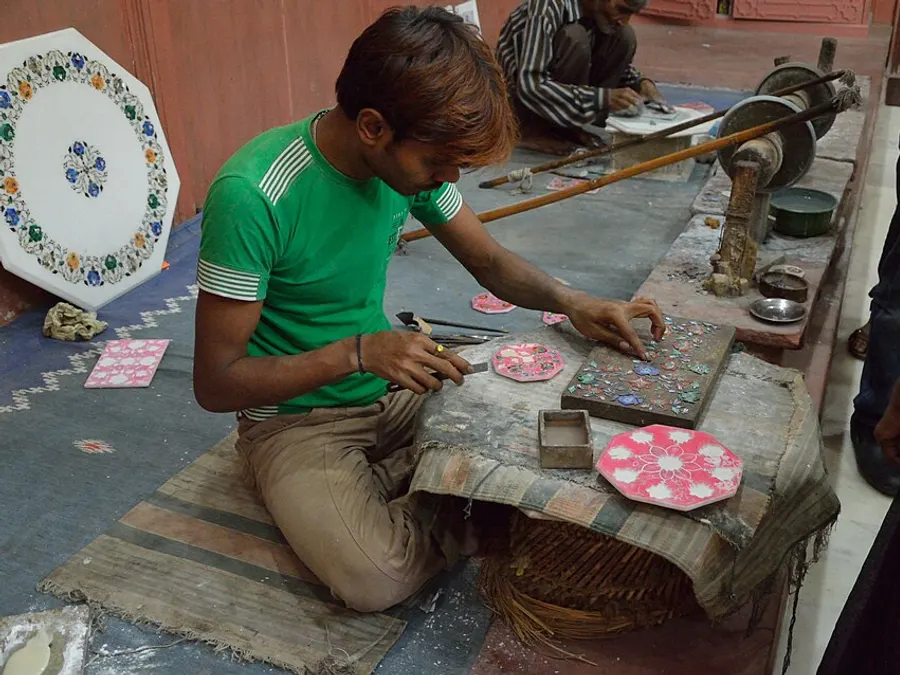
Marble inlay, soapstone carving, and Pietra Dura from India sit comfortably in the UAE's premium décor and gifting market, but winning here means treating Dubai not just as an end-buyer but as a re-export hub for the wider GCC. The craft's weight, fragility, and value concentration demand tight packing, clear HS classification, and realistic port choices.
Who buys Marble & Stone Handicraft in the UAE and what product fits
The UAE buyer base is layered, and your product mix should match the channel:
- Hospitality and fit-out contractors in Dubai and Abu Dhabi procure marble inlay tabletops, Pietra Dura panels, and soapstone accent pieces for villas, hotels, and restaurants. They want consistent quality across 30–200 pieces and design files/spec sheets in advance.
- Specialty décor retailers in Al Quoz, JLT, and the Gold/Diamond Park area buy small-lot showpieces: inlay coasters, jewellery boxes, and bookends in the AED 80–500 range.
- Religious and gifting trade for the Indian diaspora (Diwali, weddings, housewarming) drives steady demand for deity figures, Ganesh and Laxji in soapstone, marble pooja thalis, and small inlay frames.
- Re-exporters buy unbranded soapstone and inlay items for the Saudi, Oman, and Bahrain markets — your product ships through Jebel Ali but the label is rarely "Made for UAE".
Pietra Dura picture frames and jewellery boxes travel well; full marble dining tables do not — they are too heavy for air and break too easily in containers unless crated individually.
Export mechanics from India
- IEC (Import Export Code) from DGFT is non-negotiable; without it, no bank will clear your foreign remittance.
- GST LUT (Letter of Undertaking) on the GST portal lets you export under LUT without paying IGST and claim refund of input credit. Most handicraft exporters file this once a financial year and ship under it.
- RCMC from EPCH (Export Promotion Council for Handicrafts) gives you access to MAI/MEA scheme benefits, foreign buyer lists, and the Council's BSM/RBSM stalls at Ambiente and Index Dubai.
- Shipping bill filed at ICEGATE under HSN 9703 (works of art) or 6802 (worked monumental stone); choose the right one — 9703 is the usual fit for handicraft, 6802 if the item is architectural.
- RoDTEP scrip and IGST refund (if you paid and claimed) are the two realisations beyond the invoice value.
- Port choice: Mundra is the natural gateway from Rajasthan and Gujarat (Udaipur soapstone, Kishangarh marble). Nhava Sheva/JNPT works for Mumbai-based consolidators. For Agra marble inlay, road-bringing to Mundra is faster than rail to Mumbai.
Shipping, lead time, and UAE customs/compliance
- Sea FOB Mundra → Jebel Ali is 3–5 days; door delivery to Dubai is usually under 10 days from factory.
- Air from Delhi, Jaipur, or Mumbai for small, high-value items (Pietra Dura boxes under 50 kg) clears in 24–48 hours.
- UAE customs sits under the Federal Authority for Identity, Citizenship, Customs & Port Security. Most handicraft items attract a low customs duty band, but verify the exact rate and any value-based thresholds with the authority before quoting — the number changes by HS code.
- ESMA (Emirates Authority for Standardisation and Metrology) is relevant if your product carries any safety or labelling claim (e.g., food-contact marble trays, children's items). Confirm whether your specific SKU needs an Emirates Conformity Assessment Scheme (ECAS) certificate.
- CITES: if Pietra Dura uses any semi-precious stone on the CITES appendix list, you need an export permit from the Wildlife Institute of India. Lapis, malachite, and most traditional stones are fine; check each one.
- A Certificate of Origin from the Chamber of Commerce is standard; a GI certificate for Agra Marble Inlay adds premium positioning.
MOQ, pricing, samples, and quality/GI notes
- MOQ: 50–100 pieces for coasters, boxes, and small items; 10–20 pieces for tabletops and large Pietra Dura panels.
- Pricing: quote FOB in USD per piece, with a clear breakage-replacement clause. Marble inlay labour is intensive — never sell below the labour-plus-stone floor; UAE buyers will test your floor.
- Samples: UAE buyers expect paid samples (USD 30–80 depending on size) with courier cost borne by the buyer; deduct sample cost from the first invoice.
- Quality: visible glue lines, chipped inlay, or hairline cracks kill repeat orders. Photograph every batch.
- GI: use "Agra Marble Inlay" labelling where genuine — it carries real premium weight with Dubai's Indian luxury buyers and is a defence against Egyptian and Chinese lookalikes in the souk trade.
Bottom line
The UAE is a margin-friendly, design-sensitive market where soapstone and Pietra Dura travel better than heavy marble. Sort your IEC, LUT, EPCH RCMC, and HS code first; ship FOB Mundra to Jebel Ali unless air pays for itself; and treat ESMA, customs duty, and CITES checks as deal-breakers, not afterthoughts. Build a price floor that respects the craft — the market will.
FAQ
What documents are required to export marble and stone handicrafts from India to the UAE?+
Indian exporters must hold an Import Export Code (IEC) from DGFT, a GST registration, a commercial invoice, packing list, bill of lading or airway bill, certificate of origin issued by an authorised agency, and a fumigation certificate (ISPM-15) if wooden pallets or crates are used for packaging.
Which HS code applies to marble and stone handicrafts being shipped to the UAE?+
Most marble and stone handicrafts are classified under Chapter 68 of the Indian Trade Classification, typically HS code 6802 (worked monumental or building stone and articles thereof), though the exact sub-code depends on the product's finished form and intended use.
Get an export quote for the UAE
One RFQ reaches verified Indian marble & stone handicraft exporters — with MOQ, FOB pricing, and lead time to the UAE.
Request a quote →