Export Marble & Stone Handicraft from India to the UK
Exporting Marble & Stone Handicraft from India to the UK: buyer demand, IEC/GST/EPCH mechanics, freight, the UK customs, MOQ and pricing — with verified Indian…
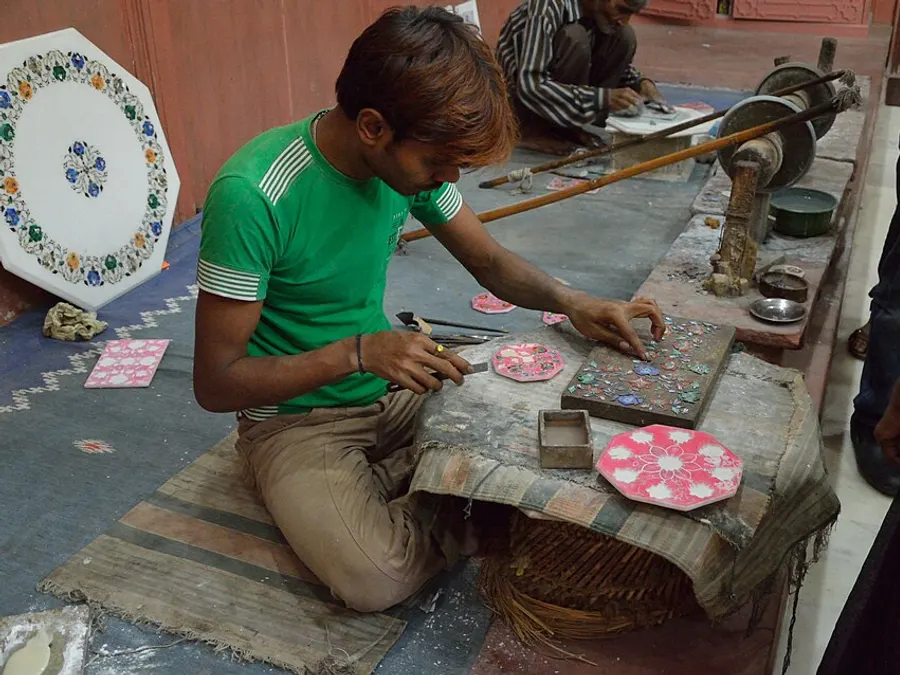
UK buyers — independent interior designers, heritage home décor retailers, luxury hotel procurement teams, and Indian-diaspora gift importers — actively source Indian marble inlay, soapstone carvings, and Pietra Dura work. Post-Brexit paperwork adds friction but does not dent demand, because Indian stonework offers craftsmanship and pricing that Italian and Portuguese workshops cannot match. You win on either volume homeware (coasters, soapstone incense holders, candle stands) or one-off bespoke tables and wall panels for designers.
Who buys Marble & Stone Handicraft in the UK and what fits
Three buyer segments dominate:
- Interior designers and architectural specifiers sourcing Pietra Dura tabletops, console tables, fireplace surrounds, and decorative wall panels. They want Makrana or Rajasthan white marble with semi-precious inlay (lapis, malachite, mother-of-pearl).
- Home décor and gift retailers (think Heal's, Cinnamon, and independent boutiques) ordering soapstone carved boxes, candleholders, mortar-and-pestle sets, agate-ware trays, and small inlay coasters.
- Garden and heritage landscaping buyers take larger stone planters, fountains, and statuary — heavier, more seasonal, mostly sea-freight.
For volume, soapstone kitchenware and inlay coasters move well. For margin, commissioned Pietra Dura furniture pieces command premium pricing in the £800–£15,000 range.
Export mechanics from India
You need four things in place before the first shipment:
- IEC (Import Export Code) from DGFT — mandatory, applied online, lifetime validity.
- RCMC from EPCH (Export Promotion Council for Handicrafts) — gives you access to EPCG, MAI/ MDA scheme benefits, and helps at customs.
- GST LUT (Letter of Undertaking) filed on the GST portal for zero-rated export supplies; without it, you refund IGST later, which delays working capital.
- Shipping bill filed at the port of export; FOB India is the standard Incoterm for this trade.
Typical FOB ports: Mundra (Gujarat) handles the bulk of Rajasthani stone craft, Nhava Sheva (JNPT) for West-bound consolidated cargo, and Mangalore for South Indian stone. Inland container depots at Jodhpur and Udaipur allow ex-works stuffing. HS codes typically fall under 68.02 / 68.15 (worked monumental/building stone and articles of stone) — confirm exact classification with a CHA.
Shipping, lead time, and UK compliance
Sea freight Mundra → Felixstowe or London Gateway: 20–26 days transit plus 4–6 days origin handling. Air freight via Delhi or Mumbai to Heathrow: 3–5 days, used for samples, small inlay pieces, and replacement orders. Marble and soapstone are heavy and fragile — insist on foam-lined wooden crating, ISPM-15 compliant, and "do not stack" markings; damage claims are the single biggest margin killer in this trade.
On the UK side, HMRC's Customs Declaration Service (CDS) processes the import. You or your agent will need a commercial invoice, packing list, certificate of origin (preferable under the India–UK FTA, effective from 2025 — verify preferential origin rules with HMRC), and a EUR.1 or statement on origin if claiming duty reduction. UKCA marking is not mandatory for purely decorative stone articles, but if any item has a functional/safety component (e.g., a soapstone food-contact bowl), UK food-contact materials regulations apply — verify with the Food Standards Agency and OPSS (Office for Product Safety & Standards). CITES is not typically triggered for marble, soapstone, or agate, but double-check any semi-precious inlay material.
MOQ, pricing, samples, and quality notes
MOQ is flexible: a single bespoke Pietra Dura console ships by air; container loads of soapstone start around 300–500 kg per SKU for sea. Price on FOB basis in USD or GBP, with separate quotes for crating. Samples are paid and refundable against a 50%+ order — UK buyers expect this and it filters serious buyers from casual ones. Use GI-tagged Makrana marble where authenticity matters; obtain a GI declaration from the Agra/Makrana cluster. Inspect for hairline cracks, inlay gaps, and dimensional tolerance before stuffing.
Bottom line
Indian marble inlay and soapstone carving sell well into the UK because the craft is irreplaceable and pricing is competitive. Lock in your IEC, EPCH RCMC, and GST LUT first, then build around Felixstowe-bound sea freight and 25–35 day door-to-door cycles. Always verify current UK import duty and India–UK FTA preferential origin terms directly with HMRC before quoting.
FAQ
What documents are required to export marble and stone handicrafts from India to the UK?+
Key documents include the Commercial Invoice, Packing List, Bill of Lading or Airway Bill, Certificate of Origin (issued by the Chamber of Commerce), GST-compliant export invoice, and an IEC (Import Export Code) from DGFT. For handmade items, a Certificate of Handicraft Origin can help claim preferential duty benefits under the India-UK FTA.
Do marble and stone handicrafts from India attract UK import duty or VAT?+
Under the UK Global Tariff, carved or worked monumental/building stone (HS 6802) typically attracts 0% customs duty, while articles of stone (HS 6806) may attract a nominal duty. Importers must pay UK VAT (currently 20%) on the CIF value plus duty, and an EORI number is required to clear goods through UK customs via a customs broker or agent.
Get an export quote for the UK
One RFQ reaches verified Indian marble & stone handicraft exporters — with MOQ, FOB pricing, and lead time to the UK.
Request a quote →