Export Handloom & Handwoven Textiles from India to the UK
Exporting Handloom & Handwoven Textiles from India to the UK: buyer demand, IEC/GST/EPCH mechanics, freight, the UK customs, MOQ and pricing — with verified Indian…
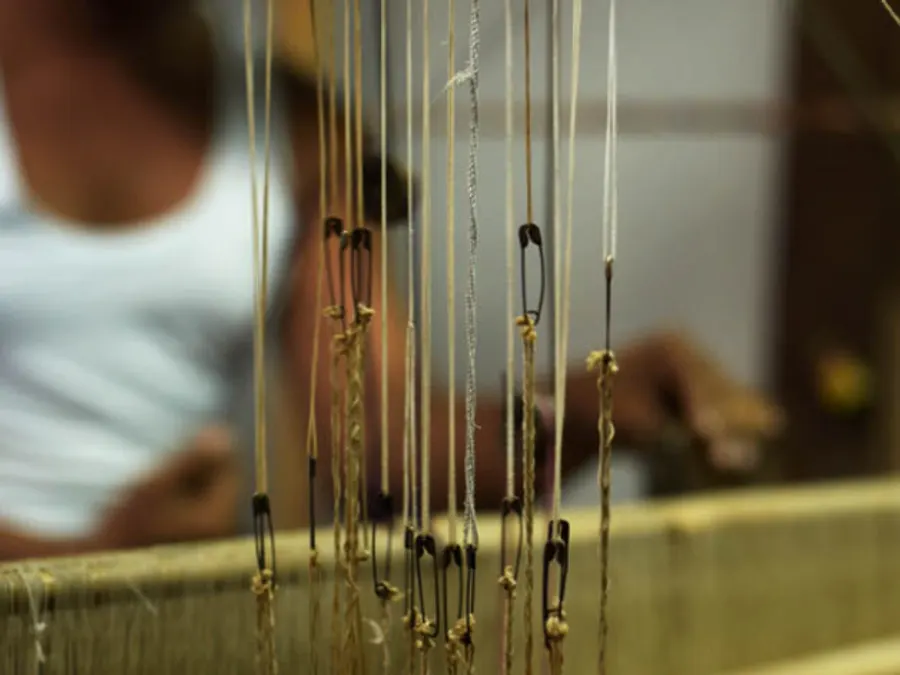
Handloom and handwoven textiles from India sell well into the UK when positioned as heritage cloths for indie fashion labels, soft-furnishing brands, and museum-adjacent interior projects — but the route to market is now genuinely post-Brexit, and the compliance perimeter looks different from what most Indian exporters remember from the EU era. This guide covers the realistic flow for shipping Jamdani, Ikat, Bandhani, block-printed cotton, and similar by-the-metre fabric into Great Britain (Northern Ireland follows EU rules separately).
Who buys Handloom & Handwoven Textiles in the UK and what product fits
UK buyers split into three practical cohorts. First, indie fashion and bridal designers sourcing Jamdani, Chanderi, Tussar, and Banarasi by the roll for capsule collections — they want under 300 m per design, hand-finished selvedges, and consistent hand-feel. Second, home décor brands and interior stylists buying hand-block printed cotton, Ikat, and Dabu cloth for cushions, curtains, and lampshades; here 100–500 m per SKU is typical and visual variation between pieces is welcomed. Third, heritage retailers, fabric shops, and museum gift suppliers who need smaller cuts (1–10 m) with strong provenance — this is where GI-tagged weaves and stories around weaver cooperatives carry real margin. Sell narrow categories at depth rather than broad catalogues; UK independents rarely reorder generic "Indian fabric" ranges.
Export mechanics from India
You need four things before the first shipment. IEC from DGFT is mandatory and gets attached to every shipping bill. For zero-rated GST, either file a Letter of Undertaking (LUT) on the GST portal and ship without IGST, or pay IGST and claim refund — LUT is cleaner for regular exporters. Get an RCMC from the Handloom Export Promotion Council (HEPC); if your line leans more into craft than textile (e.g., hand-block printed stoles, Bandhani dupattas), an EPCH RCMC is equally valid. At the port, file a shipping bill under the correct HS code — woven cotton is typically 5208–5212, woven silk 5007, hand-block printed cotton often 5208/5209 with "hand-printed" declared, Ikat usually 5407/5513 family. Confirm the exact code on ICEGATE before each shipment. FOB pricing from Nhava Sheva/JNPT or Mundra is the norm; Karur is useful for South Indian home-textile volumes, and Tirupur for cotton. Stack RoDTEP benefits into your landed cost spreadsheet and mention them in your proforma.
Shipping, lead time, and UK customs/compliance
Sea freight from Nhava Sheva or Mundra to Felixstowe, Southampton, or London Gateway runs 18–25 days plus 1–3 days for UK customs clearance. LCL is fine up to ~5 cubic metres; above that, a 20 ft FCL makes cost sense. Your UK buyer must hold an EORI number and use a UK customs broker — the EU broker they used pre-2021 cannot clear goods into Great Britain. UK import duty is set by the UK Global Tariff (gov.uk/trade-tariff); the rate depends on the exact 10-digit code and fibre mix, so always ask the buyer to confirm before quoting. Do not invent or quote rates — they vary and the buyer/broker must verify. Fabric by the metre generally does not require UKCA marking (that applies to finished regulated products), but you must meet UK REACH chemical rules (no banned azo dyes, restricted formaldehyde), and follow the retained UK Textile Products (Labelling and Marking) Regulations for fibre composition and country-of-origin labelling. Larger UK retailers may also ask for a Modern Slavery Act supply-chain statement.
MOQ, pricing, samples, and quality/GI notes
For handloom, expect serious buyers to ask for 50–100 m per design as a soft MOQ, with full repeats of 200–500 m for production. Price on FOB $/metre, broken into yarn, weaving, finishing, packing, and overhead — UK buyers read itemised costs and respect transparency. Send hand-cut 1–2 m swatches with proper selvedge and a signed-off lab-dip; offer paid samples (refundable on order) to filter serious accounts. Slubs, mild yarn variation, and small motifs shifts are features of handloom, not defects — put a one-page "what to expect" sheet in every sample pack. For GI-tagged weaves (Banarasi, Chanderi, Jamdani, Pochampally Ikat, Tangaliya, etc.), use the authorised GI logo and a signed affidavit from the weaver cluster; UK heritage buyers pay 15–30% premiums for verifiable GI provenance, and the documentation also helps with UK customs valuation disputes.
Bottom line
UK handloom buyers reward provenance, fibre honesty, and clean paperwork over rock-bottom pricing. Lock in HEPC RCMC, LUT, correct HS coding, and RoDTEP on the India side, and align early with your buyer's EORI, UKGT verification, and labelling rules on the UK side. Do that and post-Brexit Britain becomes a steady, premium-paying market for Indian weaves.
FAQ
What documents are required for exporting handloom and handwoven textiles from India to the UK?+
Indian exporters need an Import Export Code (IEC), GST registration, commercial invoice, packing list, shipping bill filed via the ICEGATE portal, bill of lading or airway bill, and a certificate of origin. If the consignment uses wooden packaging, an ISPM-15 compliant fumigation certificate is also required for UK customs clearance.
Do UK import duties apply to handloom textiles from India under the India-UK trade agreement?+
Yes, but tariff treatment depends on the product's HS code and whether it meets the rules of origin under the India-UK Comprehensive Economic and Trade Agreement (CETA). Qualifying handloom goods may receive reduced or zero preferential duty—exporters should verify the specific tariff line and origin criteria using the UK Trade Tariff tool on gov.uk and DGFT notifications.
Get an export quote for the UK
One RFQ reaches verified Indian handloom & handwoven textiles exporters — with MOQ, FOB pricing, and lead time to the UK.
Request a quote →