The Golden Sample in Indian Export Orders
How buyer and Indian exporter seal an approved golden (reference) sample before bulk: what it governs (colour, dimensions, finish, packing), counter-sample
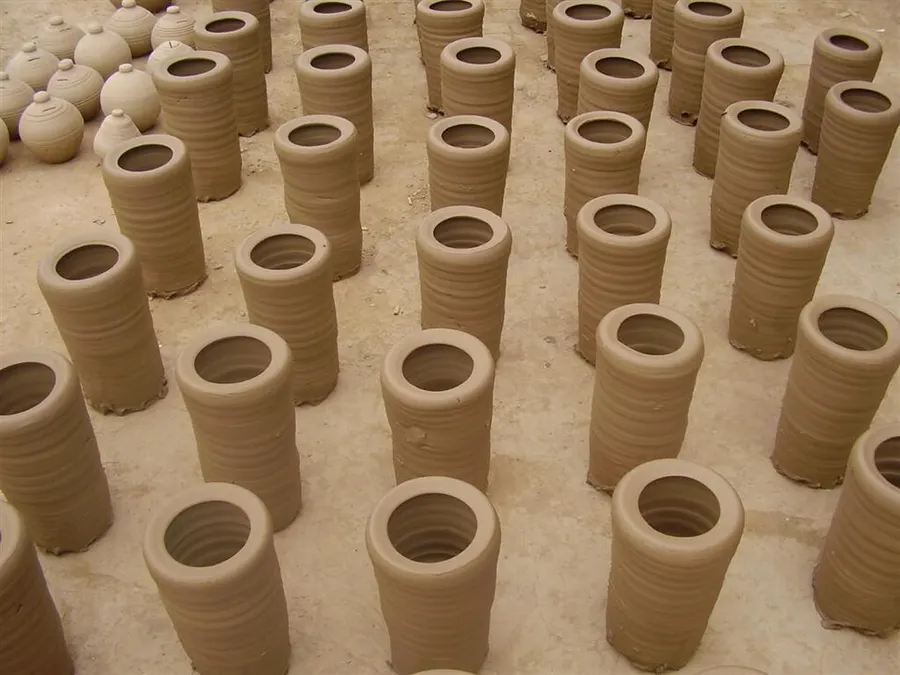
A golden sample (also called a reference, approval, or sealed sample) is the single, mutually signed-off piece that locks in colour, dimensions, finish, workmanship, and packing for an entire bulk export order from India. It becomes the legal and visual benchmark at pre-shipment inspection (PSI), and most disputes between an overseas buyer and an Indian handicraft exporter are settled against this sample rather than against a written specification alone.
What a “golden sample” really is
In handicraft exports, no two pieces are identical. A brass lamp, a hand-block printed dupatta, a Kashmiri papier-mâché box, or a Channapatna wooden toy will always carry small variations in shade, grain, or finish. To avoid endless arguments, the buyer and exporter jointly approve one piece — or a small set, one per approved shade or size — and treat it as the reference for the entire shipment. This approved piece is the golden sample.
It is typically:
- Signed and dated by both parties (physical signature on a label, or digital sign-off with timestamped photos)
- Sealed in a tamper-evident bag, often with stickers from EPCH or a third-party inspection agency
- Stored at controlled conditions to prevent fade, warp, or tarnish
What the golden sample governs
A well-prepared golden sample pins down:
- Colour shade — exact Pantone or reference for dyes, lacquers, oxidised finishes, antique patinas
- Dimensions and tolerances — height, diameter, weight, wall thickness, with a clearly stated tolerance (e.g., ±2 mm or ±3%)
- Surface finish — matte, gloss, antique, hand-rubbed, lacquered, painted, natural
- Material and construction — base metal, wood species, fabric composition, joinery, embroidery density
- Workmanship standards — knot count, carving depth, symmetry, visible defect limits
- Packing — individual poly wrap, tissue, inner box, master carton, silica gel, stickers, barcodes
- Labelling and documentation — care labels, “Made in India” mark, barcodes, hangtags
Anything not written into the spec but matters to the buyer must either be visible in the golden sample or noted separately in writing.
The approval workflow
A typical flow for an Indian handicraft exporter looks like this:
- Pre-production sample (PPS) sent to the buyer after initial product development.
- Lab dip / lot sample for colour-sensitive items — textiles, painted woodenware, lacquerware.
- Size set / grading set for garments, footwear, or any product with size variation.
- Buyer’s written sign-off by email, on letterhead, or via a pro-forma invoice annotated “golden sample approved.”
- Sealing — the approved piece is labelled “GOLDEN SAMPLE” with signatures, sealed, and photographed.
- Three-way custody — one sealed sample with the buyer, one with the exporter in India, one with the inspection agency or EPCH if they are involved.
Counter-samples held in India
Counter-samples are duplicates of the golden sample, retained inside India so the exporter and any third-party inspector can match bulk production against the reference without shipping the original around. Common practice:
- Exporter retains one at the factory or warehouse, in a sealed envelope inside the QC room.
- EPCH or a nominated inspection agency retains one if the buyer has appointed them for PSI. EPCH runs recognised pre-shipment inspection services for handicrafts and can act as a neutral custodian.
- Buyer’s India office or buying agent retains one if the buyer has local representation.
- A fourth sealed sample is sometimes kept with a third-party lab for material or fibre testing where BIS standards apply (e.g., lead content in metalware, colour fastness in textiles). Verify the applicable Indian Standard and conformity route for your product with the Bureau of Indian Standards.
Storage matters: textiles must be kept away from direct sunlight; metals in dry, silica-gel-conditioned pouches; wood in humidity-controlled rooms.
How it settles disputes at pre-shipment inspection
At PSI — whether conducted by EPCH, SGS, Bureau Veritas, Intertek, or a buyer’s own QC team — the inspector lays the bulk pieces alongside the golden sample and the India-held counter-sample, and judges each lot against the reference. The process usually:
- Compares colour under agreed lighting (often D65 daylight or TL84 store lighting).
- Measures dimensions against the tolerance stated in the golden sample sheet.
- Runs an AQL (Acceptable Quality Level) check for visible defects — for handicrafts this is typically a buyer-defined AQL, commonly 1.0 to 2.5 for critical defects and 2.5 to 4.0 for major or minor.
- Checks packing and labelling against the golden sample’s packing prototype.
If a piece is within tolerance of the golden sample, it ships. If it is outside tolerance but acceptable, the deviation is recorded and the buyer’s deviation note is signed. If it is outright off-spec, the lot is rejected, reworked, or replaced at the exporter’s cost. The signed PSI certificate references the golden sample by number and date, and forms part of the customs paperwork filed on the ICEGATE portal under CBIC.
Worked example
Order: 5,000 hand-hammered brass diyas, antique finish, 8 cm diameter, packed in individual kraft boxes of 12.
- Exporter sends three samples plus a colour chip to the European buyer.
- Buyer approves one sample by email on 12 March, noting “antique shade matched, finish approved, 8 cm ± 2 mm.”
- Sample is sealed as Golden Sample GS-BD-0325-01 in a tamper-proof bag; signed by both parties.
- Counter-samples held: (a) exporter’s factory QC room, (b) buyer’s India agent in Jaipur, (c) EPCH panel for random reference.
- Production of 5,000 pieces begins; in-line QC checks 10% daily against the counter-sample.
- Pre-shipment inspection at 100% packed goods: EPCH inspector compares 200 randomly drawn pieces against GS-BD-0325-01, measures dimensions, checks finish and packing.
- PSI certificate issued; shipment moves to port, ICEGATE shipping bill generated, and the exporter’s IEC (issued by DGFT — verify current process and documents on the DGFT portal) is quoted on the invoice and packing list.
Checklist for the Indian exporter
- Send a written sample-submission note with every sample, asking specifically for “golden sample approval.”
- Insist on a dated, signed sign-off — verbal approvals are not enough.
- Seal the approved sample in a tamper-evident bag, label it clearly, and photograph it.
- Keep a counter-sample in India under correct storage conditions.
- State tolerances (dimensions, shade, weight) in writing — do not leave them implied.
- Reference the golden sample number on the pro-forma invoice, sales contract, and PSI certificate.
- Where BIS standards apply to your product, verify the current Indian Standard and conformity route with BIS before quoting.
Common pitfalls
- Treating any one piece as “the sample” without formal sign-off.
- Sending a fresh sample for each shipment under the same order — the golden sample must remain the same piece for the duration of the contract.
- Not stating tolerances, leaving the buyer free to reject the whole lot on a 1 mm difference.
- Storing the counter-sample in poor conditions, so it fades or warps and no longer matches bulk production.
Bottom line
For Indian handicraft exporters, the golden sample is the cheapest insurance against shipment rejection — a single, sealed, mutually approved reference that converts a subjective craft conversation into a measurable standard. Get the sign-off in writing, keep counter-samples in India under proper conditions, and reference the golden sample number on every document from the pro-forma invoice to the ICEGATE shipping bill. Done well, it protects both the exporter’s margin and the buyer’s brand promise — and the discipline you build for one order becomes your reusable standard for the next. GreenFlip India (greenflip.in) sits inside the wider GreenFlip network at greenflip.org, connecting Indian craft exporters to verified overseas demand where this kind of disciplined, sample-locked execution is increasingly the entry ticket.
FAQ
What is a 'golden sample' in an Indian export order, and how is it formally sealed between the buyer and the Indian exporter?+
A golden sample (also called a reference or seal sample) is a single unit mutually approved by the Indian exporter and the overseas buyer after the sample development stage, before bulk production is cleared. It is physically sealed (signed, stamped, dated, and often wrapped in tamper-proof tape or sealed in a polythene pouch) by both parties and recorded against the buyer's purchase order, so that every subsequent shipment lot can be benchmarked against the same unit.
Which quality parameters does the sealed golden sample govern during pre-shipment inspection (PSI) in India?+
The sealed golden sample is treated as the contractual benchmark for colour shade, dimensions and tolerances, surface finish, hand feel, stitching or workmanship, and outer/carton packing. The buyer's third-party inspection agency (commonly SGS, Bureau Veritas, Intertek or TUV SÜD, all of whom operate through their Indian offices) accepts or rejects lots at the exporter's premises by physically comparing random samples from the lot against this reference.
Why are counter-samples of the golden sample retained in India, and how do they help settle disputes at PSI?+
The Indian exporter keeps one or more counter-samples (duplicates of the approved golden sample) at the factory, and sometimes a neutral counter-sample is also deposited with a third-party lab in India, while the original travels back to the buyer's country. If the buyer's inspection agency raises a deviation at PSI, both counter-samples and the original are re-compared; the unit that is best preserved, traceable, and signed by both parties is treated as the true reference, and any defect in the bulk matching that reference is generally treated as accepted rather than a fresh claim.
Ready to source?
Submit one RFQ and we route it to matched suppliers across 12 origins.
Request a bulk quote →