IHGF Delhi & India's Handicraft Trade Shows: A Buyer's Guide
A buyer's guide to India's handicraft trade-show circuit — IHGF Delhi Fair (run by EPCH), and how it compares to Ambiente and Maison&Objet for Indian sourc
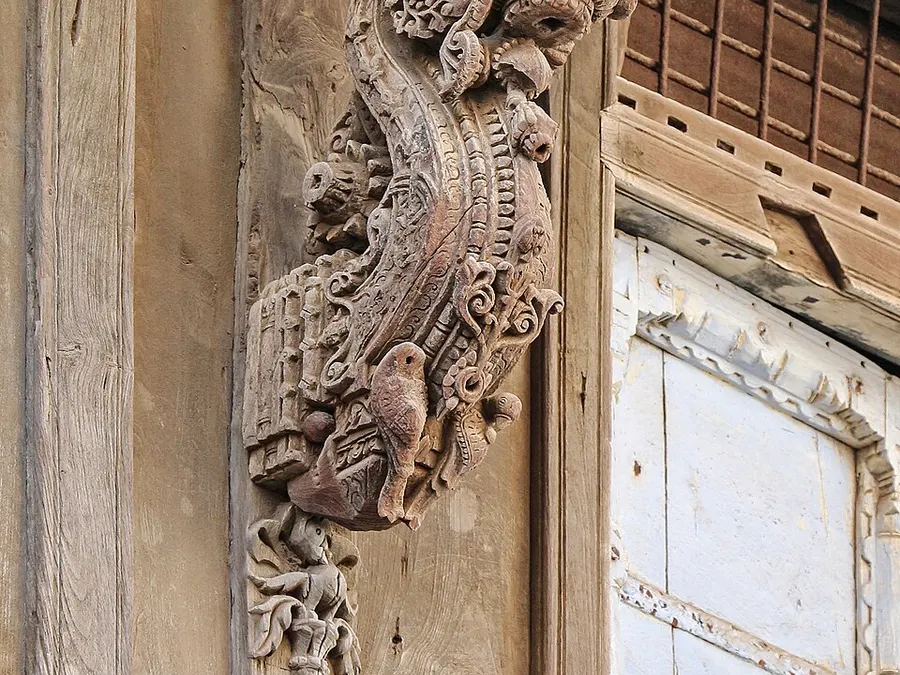
The Indian Handicraft and Gift Fair (IHGF) at India Expo Mart, Greater Noida, run by the Export Promotion Council for Handicrafts (EPCH), is the most direct route for overseas buyers and Indian importers to source from verified Indian craft exporters under one roof. Pair IHGF with a disciplined pre-show checklist, focused on-floor meetings, and a written follow-up loop, and samples reliably reach your studio or warehouse without slipping through the cracks. For pure scale, Frankfurt’s Ambiente leads globally; Paris’s Maison&Objet is design-led — but neither matches IHGF’s depth in Indian craft clusters.
What IHGF Delhi actually is
IHGF is EPCH’s flagship fair, typically held in the spring at India Expo Mart in Greater Noida (Delhi NCR). It clusters Indian manufacturers from the major craft belts — Moradabad (metalware), Jaipur (textiles, jewellery, blue pottery), Saharanpur (wood), Jodhpur (furniture), Khurja (ceramics), and clusters from Karnataka, West Bengal, and the Northeast. EPCH runs the show and pre-vets exhibitors, which is a meaningful filter in a market where quality variance is real.
How IHGF compares to Ambiente and Maison&Objet
| Show | Location | Timing | Indian-craft relevance |
|---|---|---|---|
| IHGF Delhi | Greater Noida | Spring (annual) | Deepest direct-from-factory Indian range, EPCH-vetted exporters |
| Ambiente | Frankfurt | February | World’s largest consumer-goods fair; strong Indian pavilions in gifts, decor, textiles |
| Maison&Objet | Paris | January + September | Design-forward, premium home; fewer but higher-priced Indian exhibitors |
For a buyer building an Indian craft programme, IHGF is where you meet the factories. Ambiente and M&O are where you read the trend, test retail, and place smaller reorders. The smart route for serious Indian sourcing is IHGF first, then one of the European shows for trend calibration.
Pre-show preparation: the buyer checklist
- Register as a buyer through EPCH’s official channels. For verified membership details and current exhibitor lists, check EPCH directly: https://epch.in/membership-registration.
- Sort India-side paperwork early: an IEC (Import Export Code) from DGFT is mandatory for any entity importing into or exporting out of India. Apply on the DGFT portal and verify current document requirements there.
- Confirm GST registration status with your CA. Line up a customs broker in Delhi/Noida before you fly.
- Build a one-page brief: category, materials, finish standards, target FOB/EXW price band, MOQ, packaging, and any certifications needed (e.g., BIS for applicable product categories).
- Pre-book 8–12 supplier meetings through the IHGF buyer portal. Walk-ins are common, but scheduled meetings are sharper.
Running supplier meetings that go somewhere
Plan half the day, not the whole day. Energy dips after lunch, and good follow-up comes from fresh, focused meetings. Walk into each booth with your brief printed on a simple A4 sheet — IHGF suppliers see hundreds of buyers a day, and a one-pager cuts through small talk fast.
- Ask for factory location and cluster, not just the brand name — it tells you material authenticity.
- Confirm MOQ across SKUs, not just the hero product.
- Pin down lead time after sample approval, payment terms (TT advance, LC, part-cash), and which Incoterms apply.
- Photograph the back of every sample card and business card — you will thank yourself at 11 pm.
- Ask the exporter whether they ship FOB, EXW, or CIF. For cross-border consignments routed through the wider GreenFlip network (greenflip.org), FOB Mundra or Nhava Sheva is the default.
Follow-up so samples actually land
Most IHGF deals die in the gap between the show floor and the first sample. Lock the loop in writing within 48 hours.
- Same day: email a short recap — what you liked, the price discussed, what you need changed.
- Within a week: request a proforma invoice (PI) and a paid sample cost.
- Pay the sample cost by TT and share your courier account (DHL/FedEx) for return shipping.
- Track formal export shipments through ICEGATE (CBIC’s customs electronic portal) or via the courier’s tracking for samples.
- Set a 14-day internal deadline: if the sample doesn’t ship in 10 business days, follow up.
India-specific trade mechanics buyers should know
- IEC (Import Export Code) is issued by DGFT and is mandatory for any entity importing into or exporting out of India. Apply via the DGFT portal and verify current document requirements there.
- Customs declarations for goods move through ICEGATE, operated by CBIC. Your CHA or customs broker files the shipping bill there.
- GST applies on the import of goods into India. An overseas seller typically has no GST liability in India if the importer is the taxable person — confirm the structure with a CA.
- BIS (Bureau of Indian Standards) certification is mandatory for some categories (certain metals, toys, electronics-adjacent goods). Check your ITC-HS code’s BIS requirements on the BIS portal before ordering.
- RoDTEP and related export incentive schemes apply on a notified basis for Indian exporters. Verify current remission rates and HS coverage on the DGFT/RoDTEP portal.
Compliance note: rates, form numbers, and notification dates for IEC, BIS, RoDTEP, and GST change periodically. Always verify on the official portal (DGFT, CBIC, BIS, GST) before committing to a shipment.
A quick worked example
An Australian boutique buyer attends IHGF, shortlists three Moradabad brass exporters, requests paid samples, receives a PI for USD 4,800, pays by TT, and asks the exporter to ship FOB Mundra. Her freight forwarder files the shipping bill on ICEGATE, customs clearance happens at Mundra, GST is paid on the importer side, and a 20-ft container sails to Sydney about four weeks after sample approval. End-to-end, the disciplined version takes 8–10 weeks; the undisciplined version takes twice that.
GreenFlip India (greenflip.in) plugs directly into this loop — supplier shortlisting, sample logistics, follow-up — and connects into the wider GreenFlip network (greenflip.org) for cross-border retail and wholesale demand.
Bottom line
If your sourcing programme is India-led, IHGF is non-negotiable; Ambiente and M&O are useful complements, not substitutes. The buyers who actually get samples are the ones who arrive with a brief, leave with written next steps, and treat follow-up as the show’s second half. Paperwork — IEC, GST, ICEGATE, BIS — is the unglamorous part that makes the whole programme land.
FAQ
Should my company exhibit at IHGF Delhi Fair or focus on Ambiente and Maison&Objet to reach international buyers?+
IHGF Delhi Fair, organised by EPCH at India Expo Mart in Greater Noida, is the most cost-effective starting point for Indian handicraft exporters because overseas buyers come to your source country, cutting their travel and sample-shipping friction. Ambiente (Frankfurt) and Maison&Objet (Paris) give access to higher-spend European retailers and design houses but require substantially larger budgets for stall, visa support, and EU compliance. Most established Indian exporters use IHGF to consolidate volume orders and use the European shows mainly for brand visibility and trend scouting.
How should an Indian exporter prepare for IHGF to actually convert visitors into buyers?+
Begin with EPCH membership and stall allocation several months in advance, since prime slots in halls built around categories like home textiles, gifts, or furniture get taken early. Carry GST-compliant e-invoicing capability, a printed MOQ and lead-time sheet, and at least two finished samples per SKU so serious buyers can hand-carry or courier pieces the same day. After the show, send a personalised recap email within 48 hours with FOB pricing, ETDs, and your IEC number to keep the conversation moving.
What is the most reliable way to follow up after IHGF so samples actually reach the buyer on time?+
Ship via DHL or FedEx with a correctly classified commercial invoice (correct HS code, unit and total value, and 'free sample — no commercial value' for low-value parcels) to minimise customs holds. Share the AWB, dispatch date, and expected delivery date with the buyer the same evening, and maintain a sample-dispatch register linked to each buyer's stand number so you can measure ROI against the next edition. If feedback is not received, follow up on day 7 and again around day 21 when the sample has had time to be evaluated.
Ready to source?
Submit one RFQ and we route it to matched suppliers across 12 origins.
Request a bulk quote →