Jaipur & Rajasthan Handicrafts: An Export Guide
A guide to Rajasthan's export crafts — Jaipur blue pottery, block-print textiles, jute, and metalware — clusters, capabilities, and how to source them for
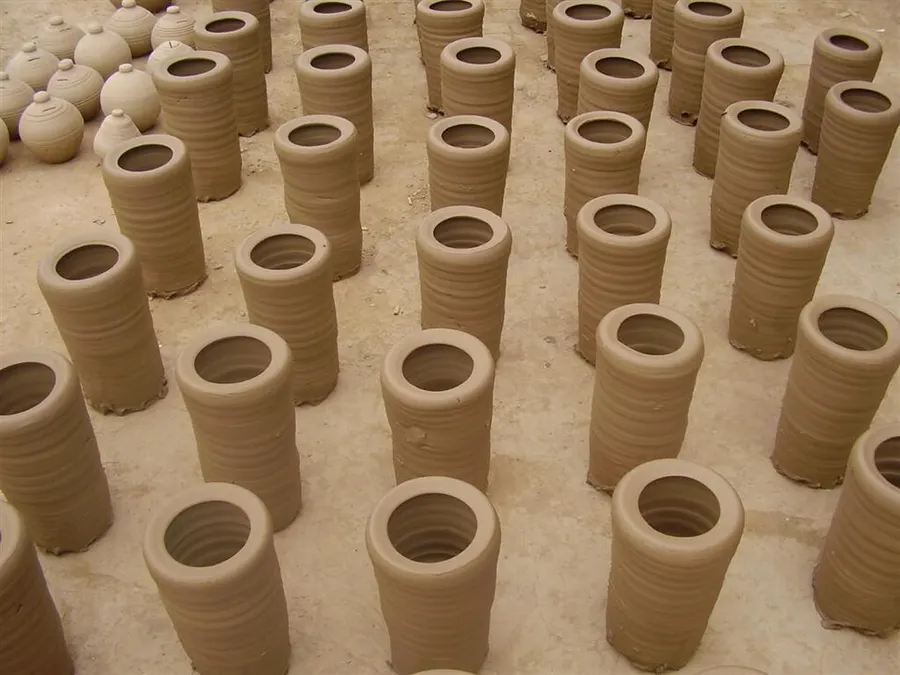
Rajasthan is one of India’s largest handicraft-export states, and four product families carry most of the export volume: Jaipur blue pottery, block-printed textiles, jute-based homeware, and metalware. The right sourcing map is by cluster and craft lineage, not by city alone, and the export spine (IEC, EPCH membership, GST, RoDTEP, customs via ICEGATE) is the same as for any other handicraft shipment from India. For overseas buyers, the practical path is to work through an export-ready sourcing partner who can show both cluster access and the compliance paper trail.
Why Rajasthan for export buyers
Rajasthan has a deep artisan base that EPCH regularly cites in the lakhs, and four craft families are export-reliable at scale. Each has its own micro-cluster, its own price band, and its own quirks on shipping and compliance. Treating “Rajasthan” as one supplier is the first mistake most new buyers make; treating it as a map of named clusters is the first sign of a serious sourcing partner.
The four flagship craft families
Blue pottery (Jaipur). A quartz-based glazed ceramic, not earthenware, so it chips differently and ships differently. The technique is concentrated in and around Jaipur in artisan clusters that trace back to the Kripal Kumbhshankar workshops and their successors. Items range from tiles and tableware to decorative vases. Lead-free glazes are a real concern in the EU and US — request a lab certificate for heavy metals per buyer or buyer-country lab protocols before the first bulk order.
Block-printed textiles (Sanganer and Bagru). Two distinct traditions, both roughly 30–40 km from Jaipur. Sanganer is known for fine, light-background floral prints, often on fine cotton or silk. Bagru is known for earthy, deeper-tone prints using natural dyes and Dabu (resist mud printing). For export, buyers typically mix Sanganer and Bagru in a single line, but watch the dye story: “natural dye” is a marketing claim and should be backed by a process note from the unit.
Jute homeware and accessories. Rajasthan is not the primary jute-growing state, but Jaipur and Jodhpur have a strong finishing and value-addition cluster — laminated jute bags, jute carpets, jute-blend tableware and gift packs. The supply chain is often multi-state (raw or semi-finished jute from eastern India, finishing and value-add in Rajasthan). Get a clear origin declaration for any “Made in India” or “Made in Rajasthan” labelling claim.
Metalware (Jaipur, Jodhpur). Brass, aluminium and mixed-metal homeware: embossed thalis, lotas, lanterns, idols and puja items, plus meenakari-style enamel work. Check for BIS standards where the product falls under mandatory Indian certification; where BIS is not mandatory, ISO 9001 or buyer-specific quality plans still apply.
Sourcing by cluster, not by city
| Cluster | Speciality | Typical MOQ logic | Distance from Jaipur |
|---|---|---|---|
| Sanganer | Block print, fine cotton/silk | Lower MOQs, retail-friendly | ~30 km |
| Bagru | Dabu, natural dye | Slightly higher MOQs, better at deep orders | ~35 km |
| Jaipur (Jagatpura, Vishwakarma) | Blue pottery | Made-to-order for many SKUs | Within city |
| Jaipur / Jodhpur | Metalware | Stock + custom runs | Within city / ~330 km |
| Jodhpur, Bikaner | Jute, leather, durries | Variable | 250–330 km |
Plan two trips: one to inspect and shortlist units, one for sample sign-off. Always ask the unit for a factory video, GST certificate, Udyam / MSME registration, and a copy of any EPCH / RCMC they hold.
Export compliance spine
For every shipment, the same spine applies, regardless of craft:
- IEC (Import Export Code) from DGFT — the first thing to obtain.
- GST registration with LUT for export of goods without payment of integrated GST; otherwise exports are zero-rated via refund.
- AD Code registration with the bank used for foreign currency receipts.
- RCMC (Registration Cum Membership Certificate) from EPCH, the export promotion council for handicrafts.
- HS code correctly classified in the ITC-HS schedule; this drives RoDTEP, IGST treatment and any drawback.
- ICEGATE for shipping bills, customs declarations and IGST refund tracking.
- RoDTEP for remission of duties on exported goods, claimed via ICEGATE against a scrip after shipment.
- BIS mandatory certification, where the specific product and the destination market require it — verify on the BIS portal before quoting.
- Fumigation / phytosanitary for textile and jute shipments to many markets, depending on destination rules.
- CITES if any animal-origin material is in the article (certain woods, shells, ivory) — not typical for these four crafts, but worth flagging.
Verify each of the above with the relevant Indian authority (DGFT, CBIC, GST portal, EPCH, BIS) at the time of quoting. Rules, scrip rates and product coverage change; do not assume last year’s numbers still apply.
Worked example: a mixed PO
A small EU buyer wants a 40 ft container mixing Sanganer-printed bed covers (HS heading for printed cotton furnishing fabrics), Bagru table linen, Jaipur blue pottery serveware, and brass lanterns.
- Quote stage. The exporter gets unit prices FOB Mundra, classifies each line to the correct HS code, and computes RoDTEP and any drawback assumptions; RoDTEP is claimed later through ICEGATE, not deducted upfront.
- Pre-shipment. The unit provides a dye-process note, a heavy-metal test for the pottery glaze, and a BIS check for the metalware. The exporter files a shipping bill on ICEGATE and the LUT-covered IGST is zero-rated.
- Shipment. Goods move from an ICD near Jaipur (or direct factory stuffing if FOB is at a Rajasthan ICD) to Mundra; an Export General Manifest is filed and the RoDTEP scrip is generated against the shipping bill.
- Post-shipment. BRC (bank realisation certificate) is downloaded, IGST refund is tracked on the GST portal, and the EPCH RCMC helps with any council-specific benefit or query.
How GreenFlip India fits in
GreenFlip India (greenflip.in) is the handicraft import–export desk for India. Through the wider GreenFlip network at greenflip.org, Indian exporters gain access to verified cross-border demand for Rajasthani craft, while overseas buyers get a single India-side sourcing partner who already knows the cluster map, the compliance spine, and the artisan lineage. It is a relationship layer on top of the standard export process, not a replacement for it.
Bottom line
Rajasthan’s export strength is craft-specific, not generic: Jaipur blue pottery, Sanganer and Bagru block prints, jute-finished homeware, and Jaipur / Jodhpur metalware. The exporter’s job is to marry the right cluster to the right buyer’s quality bar, and to keep the DGFT–CBIC–EPCH–BIS compliance spine clean from IEC to RoDTEP. Used well, the cluster-plus-compliance combination is exactly what makes “Made in Rajasthan” a defensible premium in overseas markets.
FAQ
Are Jaipur blue pottery and other Rajasthani crafts protected by Geographical Indication (GI) tags, and how can I use this for exports?+
Yes, several Rajasthani crafts hold GI tags in India, including Jaipur Blue Pottery, Bagru hand block print, Sanganer hand block print, and Kathputla (string puppets). Exporters can highlight GI status on packaging, labels, and marketing collateral to differentiate authentic products, justify premium pricing, and strengthen claims against counterfeits in destination markets. Carrying the GI certificate and producer authorisation helps customs and buyers verify authenticity.
What are the key handicraft clusters in Rajasthan I should visit for direct sourcing?+
Jaipur is the main hub for blue pottery, lac bangles, and gemstone jewellery; Bagru and Sanganer, just outside Jaipur, specialise in traditional hand block printing; Jodhpur and Jaisalmer are known for metalware, iron craft, and woodcarving; and Barmer is famous for appliqué and mirror-work embroidery. Visiting cluster-level artisan groups, karkhanas, and state emporia such as Rajasthali and the outlets of the Rajasthan Small Industries Corporation helps verify quality and negotiate directly with makers.
How should I package fragile items like Jaipur blue pottery for international export shipments?+
Each piece should be wrapped individually in acid-free tissue and bubble wrap, nested in foam inserts inside a double-walled corrugated carton, and for sea freight further crated in ISPM-15 compliant plywood to meet phytosanitary rules. Air shipments benefit from moulded pulp or EPS foam trays to absorb vibration, and cartons should carry standard orientation arrows and 'Fragile / Handle with Care' labels. Exporters are advised to insure fragile consignments and disclose the nature of goods on the packing list for smooth customs clearance.
Ready to source?
Submit one RFQ and we route it to matched suppliers across 12 origins.
Request a bulk quote →