Saharanpur Wood Carving: An Export Guide
A guide to Saharanpur's carved-wood cluster for export buyers — products, finishes, MOQ, packing for sea freight, and quality control
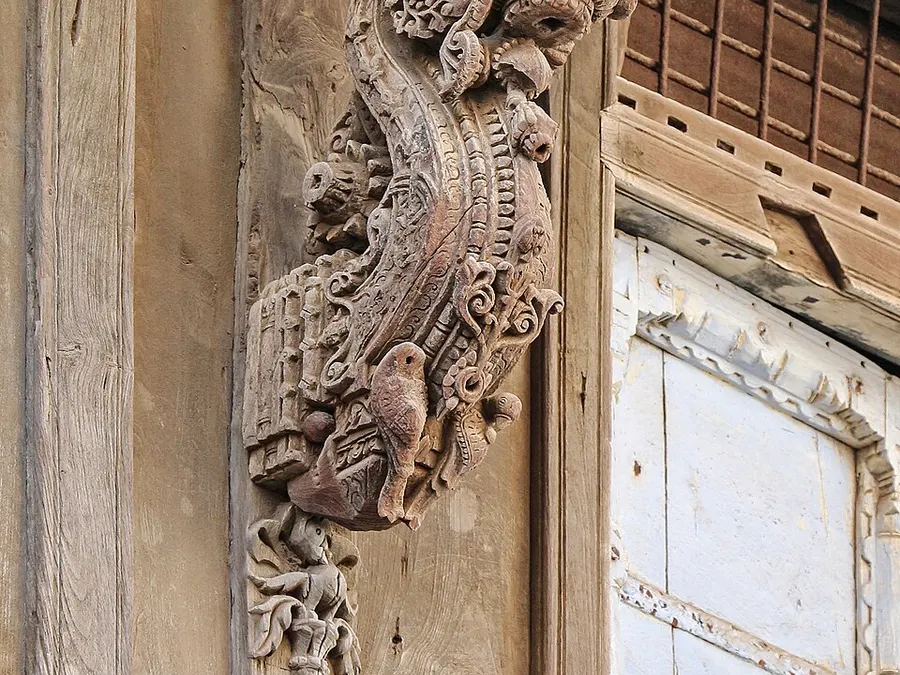
Saharanpur in western Uttar Pradesh is one of India’s oldest wood-carving clusters, recognised as a Geographical Indication (GI) craft. Export buyers can source furniture, architectural panels, screens, kitchenware, religious items and decorative carvings — mostly in sheesham, mango and sal timbers — from a deep base of skilled karigars. This guide walks through the practical export workflow: products, finishes, MOQs, sea-freight packing, quality control and the India-side compliance you should expect your supplier to handle.
Cluster snapshot
- Location: Saharanpur and surrounding villages in UP, roughly 4–5 hours by road from Delhi NCR — useful for trucking finished goods to inland container depots and ports.
- Heritage: GI-tagged “Saharanpur Wood Craft” — a useful provenance claim on packaging, catalogues and certificates of origin.
- Workforce: largely cottage-level karigars organised through family workshops and small factories; most export houses aggregate work across 20–100 workshops.
- Timbers in common use: sheesham (Indian rosewood, Dalbergia sissoo), mango wood, sal, and — for premium lines — teak and imported hardwoods.
- Lead exporter body: EPCH (Export Promotion Council for Handicrafts), which issues RCMC and runs buyer delegations and reverse buyer-seller meets.
Product range worth quoting
- Furniture: chairs, benches, jhulas (swings), dining and coffee tables, beds, wardrobes, sideboards, bar cabinets, console tables.
- Architectural and décor: jharokha-style windows, carved doors and frames, room dividers and screens, wall panels, ceiling medallions, corbels, brackets.
- Kitchen and tableware: chopping boards, serving trays, bowls, spice boxes, cutlery caddies, lazy Susans, salt-and-pepper mills.
- Religious and ceremonial: mandir units, carved pillars, puja thalis, pooja chowkis.
- Festive and gifting: Christmas ornaments and nativity sets, Easter items, photo frames, jewellery boxes.
Finishes and materials to specify
Be specific at the sample-approval stage — “any natural finish” is a recipe for mismatched batches.
- Wood: state species and grade. For sheesham, ask whether heartwood only or sapwood-included. For mango, ask whether kiln-dried (recommended for export).
- Finish options: natural oil (linseed or food-safe mineral oil for kitchenware), wax, matte lacquer, PU (polyurethane) for high-wear furniture, French polish, distressed patina, painted finishes, gold/silver leaf.
- Hardware: brass vs. iron, antique vs. polished, and whether hinges and handles are integral or sourced separately.
- Compliance touches: non-lead paints and food-contact-safe finishes for toys and kitchenware; low-formaldehyde claims for furniture sold in regulated markets (BIS-aligned documentation where applicable).
MOQ and pricing structure
Most carving houses don’t run a single “factory MOQ” — they run a per-SKU MOQ that reflects the karigar’s batch.
- Furniture pieces: 20–50 units per design per finish.
- Screens and large panels: 5–20 per design.
- Kitchenware and smalls: 200–500 per SKU; lower for stock designs.
- Festive ornaments: 1,000+ per SKU for seasonal lines.
Always confirm whether the quote is ex-works Saharanpur or includes inland transport to a Delhi / Nhava Sheva / Mundra ICD, and whether the per-piece price is for a packed or naked-goods unit.
Sea-freight packing: a working checklist
Carved wood for ocean transit needs to survive container humidity, multiple handling points and 25–40 days at sea. Use this as a buyer checklist:
- Kiln-dried timber (typically 10–14% moisture content) — ask for the drying record.
- Individual protection: foam corner guards, bubble wrap on polished surfaces, edge protectors on sharp carvings.
- Inner packing: corrugated wrap; flat-pack chairs and tables where possible to optimise container cube.
- Outer packing: 5-ply or 7-ply export cartons for smalls; plywood or timber crates for furniture and large panels.
- Container loading: silica-gel desiccants, kraft paper or a moisture barrier on the floor, and don’t stuff to the ceiling — leave airflow space and use proper dunnage.
- Wooden packaging material (pallets, dunnage, crates) must comply with ISPM-15 (heat treatment / fumigation marking) for most destination markets. Non-compliant WPM is one of the most common reasons for customs holds.
- Marks and labels: buyer barcode / retail label, country of origin, “Made in India”, handling marks (“This side up”, “Fragile”, “Keep dry”), carton dimensions, weight and SKU.
A 40 ft HC typically takes a useful mix of flat-pack furniture and smalls. LCL is fine for samples and orders under ~10–12 CBM.
Quality control: what to inspect
- Pre-production: approve a carving sample, a finish sample, a hardware sample and a packaging sample. Lock all four in writing.
- During production (DUPRO): 10% random pull — check dimensions, joinery, finish consistency and carving depth.
- Pre-shipment (PSI): another 10% pull, plus a drop test on chairs, a wobble test on tables, and a tape-pull adhesion test on lacquered surfaces.
- Documents: signed inspection report, packing list, commercial invoice, certificate of origin (preference or non-preference as the buyer requires), fumigation certificate, phytosanitary certificate where the importing country requires it.
Buyers can use EPCH-empanelled inspection agencies or third parties such as SGS, BV, TÜV or Intertek. Many Saharanpur exporters have in-house QC — treat it as the first line, not the only line.
India-side compliance to expect from your supplier
A credible export house will already have these in place. If they don’t, treat it as a red flag.
- IEC (Import Export Code) from DGFT — mandatory for any shipment out of India.
- RCMC from EPCH — needed for handicraft-sector benefits and useful at customs.
- AD Code registration with the bank and the customs port.
- Customs filing via ICEGATE (the CBIC portal) — shipping bill, Let Export Order, RoDTEP claims.
- GST: exports are zero-rated under the IGST Act. The supplier should either export under LUT without paying IGST, or pay IGST and claim refund. Verify the current procedure on the GST portal.
- BIS: relevant where compulsory certification applies to the product class in the destination market. Confirm applicability with BIS.
- Plant Quarantine (PPQS) issues phytosanitary certificates for wooden goods where the importing country requires them.
- Wood legality: some hardwoods fall under CITES controls. Confirm the species being shipped and that the supplier has the right paperwork; verify with DGFT and the Wildlife Crime Control Bureau.
Always reconfirm the current ITC-HS code, RoDTEP/RoSCTL scrip eligibility, and CITES status with DGFT and CBIC before booking production. Timber rules, scrip rates and refund procedures change periodically.
Where GreenFlip fits in
For Indian exporters, GreenFlip India (greenflip.in) is the handicraft desk connecting your Saharanpur workshop to the wider GreenFlip global network at greenflip.org, where verified overseas buyers post live demand. That means beyond EPCH trade shows, your carved-wood catalogue can be matched against real cross-border enquiries for furniture, festive items and architectural pieces.
Bottom line
Saharanpur is a credible, GI-recognised source for carved-wood furniture, screens and smalls — but the cluster’s cottage structure means your real work is on the buy-side: lock samples, specify finishes in writing, insist on kiln-dried timber and ISPM-15-compliant packing, and verify your supplier holds IEC, EPCH RCMC and current GST and Plant Quarantine paperwork. Tie MOQ to SKU economics rather than to the workshop, and always book third-party pre-shipment inspection. Done right, you get heritage craft at scale; done loosely, you get container claims.
FAQ
What carved-wood products and wood types are commonly sourced from the Saharanpur cluster?+
Saharanpur is best known for hand-carved furniture (chairs, jharokhas, screens, beds), decorative panels, temple pieces, and homeware. The cluster primarily works with sheesham (Indian rosewood), mango wood, and acacia, with teak and walnut used for premium ranges. Buyers should confirm FSC or legal-sourcing documentation for the species they order.
How are Saharanpur wood-carving consignments typically packed for sea freight export?+
Carvings are usually wrapped in acid-free tissue and bubble wrap, corner-protected with foam or thermocol, and crated in wooden boxes that meet ISPM-15 (fumigation/heat-treatment) standards required by most importing countries. Silica gel and moisture barriers are often added to prevent fungal staining during long sea voyages.
What quality checks should an importer ask for before dispatch from Saharanpur?+
Buyers commonly request a pre-shipment inspection covering carving consistency, joinery strength, moisture content (ideally under 12% for hardwoods), finish uniformity, and a final AQL-based sampling for cracks, knots, and insect damage. Third-party agencies such as SGS, Bureau Veritas, or TUV can be engaged at the Saharanpur workshop for inspection before container loading.
Ready to source?
Submit one RFQ and we route it to matched suppliers across 12 origins.
Request a bulk quote →